
A beginner’s first golf ball often ends up buried in a pond, sliced into rough, or scuffed against a cart path before the round is over. That makes the choice feel simple, but different balls can produce noticeably different sensations off the tee, with irons, and on the putting surface. Most new golfers are looking for a comfortable feel, dependable distance, and enough visibility to spend more time playing and less time hunting through grass.
A common mistake is choosing a ball because it carries a tour name or promises maximum distance without thinking about the rest of the design. Construction, cover material, visibility, alignment markings, and short-game feel all matter. A two-piece distance ball may suit a golfer who loses several balls per round, while a softer ball with more greenside control may appeal to someone who is already spending time practicing chips and putts. Swing speed, confidence, and personal priorities can change the best choice.
The nine options below cover soft-feeling, distance-focused, highly visible, alignment-friendly, and value-oriented designs. The selection includes balls for casual rounds, developing swings, and golfers who want a more refined feel around the green. Each review explains what the documented construction suggests in practical play, along with the limitations that may matter before you fill your bag.
Quick Answer
- Soft-Feel Starting Point: Callaway Golf Supersoft Golf Balls (2025, White).
- Distance-Oriented Pick: TaylorMade Golf 2021 Distance+ Golf Balls.
- Soft Titleist Alternative: Titleist TruFeel.
Comparison Table
| Product | Best Fit | Useful Feature | Main Trade-Off |
|---|---|---|---|
| Callaway Golf Supersoft Golf Balls (2025, White) | Best Overall | HyperElastic SoftFast core combines a soft feel with a speed-oriented design. | White can be harder to locate than high-visibility colors in certain rough or low-light conditions. |
| TaylorMade Golf 2021 Distance+ Golf Balls | Best for Distance-Oriented Play | REACT Speed Core is built for fast ball speed and distance-oriented play. | Distance-focused construction may offer less refined greenside response than a more control-oriented ball. |
| Bridgestone e6 | Best for a Soft Distance-Oriented Alternative | A separate ball model, rather than a color or pack variation. | Distance positioning does not establish a personal yardage gain. |
| WILSON 2024 Chaos Golf Balls | Best for Color Variety | Multicolor assortment provides a more distinctive appearance on the course. | Available information provides fewer specific details about flight and short-game behavior than several competing models. |
| TaylorMade Golf SpeedSoft Ink Golf Balls | Best for High Visibility | Distinctive ink pattern improves visual identification on the course. | Busy graphics may distract golfers who prefer a traditional clean ball appearance. |
| WILSON Profile Distance Golf Ball | Best for High-Volume Play | 36-ball package supports frequent play and practice. | Distance emphasis may leave less room for golfers seeking a more nuanced greenside response. |
| Titleist TruFeel | Best for Short-Game Feel | TruTouch core combines a distance focus with soft feel. | Golfers focused primarily on bright colors or graphic visibility have fewer visual advantages here. |
| TaylorMade Noodle Long & Soft | Best for Straightforward Everyday Use | Impact propulsion core is intended to support longer carry. | Standard white appearance offers fewer visibility benefits than patterned or colored choices. |
| Amazon Basics Core Soft Golf Balls | Best for Alignment Practice | Side-stamp alignment feature supports a repeatable putting routine. | Plain white finish is less visually distinctive than colored or graphic alternatives. |
1. Callaway Golf Supersoft Golf Balls (2025, White): Best Overall

Callaway Supersoft earns the top spot because it addresses several beginner concerns at once. Its HyperElastic SoftFast core is built around speed with a softer feel, while the hybrid cover is intended to balance distance, durability, and control near the green. That combination matters for a new golfer who may hit a driver on one hole, chunk an iron on the next, and then face a delicate pitch that demands a less harsh response.
The white finish keeps the ball familiar and easy to track against a blue sky, while the 2025 version adds a cover system focused on greenside control. This is a useful middle ground. A beginner who wants a soft ball does not have to give up the possibility of a more controlled chip or approach. It remains a practical choice for casual rounds, lessons, and early practice sessions where feel matters as much as raw distance.
Pros
- HyperElastic SoftFast core combines a soft feel with a speed-oriented design.
- Hybrid cover is intended to support distance and durability.
- Cover system emphasizes control on approach and short-game shots.
- White color provides a familiar, easy-to-track appearance.
- Balanced design suits golfers still developing preferences across the bag.
Cons
- White can be harder to locate than high-visibility colors in certain rough or low-light conditions.
- Golfers seeking a firm, tour-style response may find the soft feel too muted.
This is the strongest starting point for a golfer who wants one ball that feels comfortable from tee to green without leaning too heavily toward a single trait. A beginner who spends most rounds searching for lost balls may prefer a larger package or a brighter finish, but players who want a dependable all-around design should start here. The Supersoft is especially appealing for golfers who are beginning to notice the difference between a full swing and a delicate greenside shot.
To buy this product, click here.
2. TaylorMade Golf 2021 Distance+ Golf Balls: Best for Distance-Oriented Play

For many beginners, the most exciting moment of a round is watching the ball finally launch down the fairway. TaylorMade Distance+ is built around that sensation. Its REACT Speed Core and two-layer construction focus on high-velocity performance, while the extended-flight dimple pattern is intended to help the ball stay airborne longer and handle breezy conditions more effectively.
The ionomer cover and mid-launch profile keep the design straightforward. The added Plus Alignment Aid is useful when a new golfer is learning that putting setup starts before the stroke itself. A visible line can help create a repeatable starting routine on the green and can also be aimed down a fairway before the tee shot. This ball makes sense for casual golfers who want a simple, distance-minded option without a complicated construction.
Pros
- REACT Speed Core is built for fast ball speed and distance-oriented play.
- Extended-flight dimple pattern supports a longer airborne flight design.
- Plus Alignment Aid can help beginners create a repeatable putting setup.
- Two-layer construction keeps the design easy to understand.
- Ionomer cover offers a practical fit for routine recreational rounds.
Cons
- Distance-focused construction may offer less refined greenside response than a more control-oriented ball.
- White finish lacks the extra visibility of colored and patterned alternatives.
Choose Distance+ if your main goal is to see encouraging flight from the tee and fairway while learning basic alignment on the green. It is a sensible match for golfers who are still building confidence and do not want to spend their first seasons chasing specialized spin characteristics. Players who spend more time around the green or prefer an exceptionally soft strike may find Supersoft or TruFeel more appealing.
To buy this product, click here.
3. Bridgestone e6: Best for a Soft Distance-Oriented Alternative

A thump that feels comfortable off the driver can make a ball easier to live with over a full round. Bridgestone positions the e6 around soft feel and distance, which gives it a clearer role here than a second color of the same ball. For a golfer who dislikes a hard click at impact, that brief gives the comparison a clear starting point. Think of a smooth tee shot on a quiet morning: the aim is a predictable response you enjoy, without treating a soft sensation as proof that the shot traveled farther.
The useful comparison happens closer to the hole as well. Drop an e6 beside your current ball for a short pitch, then hit a few putts at the same target. Its distance-oriented identity makes it a sensible candidate for ordinary recreational rounds, but a golfer selecting a ball primarily for tour-style wedge control should compare a urethane model too. On a breezy finishing hole, strike quality and launch still decide where that drive finishes. The e6 label cannot choose those for you.
Pros
- A separate ball model, rather than a color or pack variation.
- Manufacturer positioning emphasizes soft feel.
- Distance-oriented design suits a straightforward recreational shortlist.
- Offers another feel comparison alongside Supersoft or Soft Feel.
- Conventional golf-ball format works across a full round.
Cons
- Distance positioning does not establish a personal yardage gain.
- A golfer prioritizing tour-style greenside control should compare urethane options.
Choose the e6 because the soft, distance-oriented brief matches the way you play. A golfer walking nine holes after work can compare it without changing clubs or inventing a new swing. Keep the same model in play long enough to judge its chips and putts, since a pleasant driver sensation is only one part of the decision. For a first bag, choose a model you can afford to keep playing while contact develops.
To buy this product, click here.
4. WILSON 2024 Chaos Golf Balls: Best for Color Variety

Golf can feel a little less punishing when the equipment invites you to have fun, and the Wilson Chaos range leans into that idea with multicolored balls. The package contains 24 balls, giving beginners more room for practice, lost-ball days, and casual rounds where the scorecard is taking a back seat. Its two-layer construction and Surlyn cover provide a simple foundation for recreational use.
This is not the choice for a golfer searching for a detailed short-game profile or a highly specialized ball fitting. Its appeal is practical and visual. A golfer who tends to forget which ball belongs to them, or who plays with friends using standard white balls, may appreciate the color mix. The larger package also helps remove some of the anxiety from a first season, when a single errant shot can send a ball disappearing into thick rough.
Pros
- Multicolor assortment provides a more distinctive appearance on the course.
- 24-ball package offers useful quantity for practice and recreational rounds.
- Two-layer construction keeps the design uncomplicated.
- Surlyn cover suits golfers seeking a durable recreational ball design.
- Color variety can help players distinguish their ball from playing partners’ balls.
Cons
- Available information provides fewer specific details about flight and short-game behavior than several competing models.
- Color selection may be inconsistent with a golfer’s preferred visibility in changing light.
Pick Chaos if you are new to golf, expect to lose balls, and want a lively assortment rather than a single uniform finish. It is especially appropriate for relaxed rounds and early practice, where quantity and easy identification matter. Golfers who want a clearly documented alignment aid or more developed greenside specifications should look toward Distance+, TruFeel, or Supersoft.
To buy this product, click here.
5. TaylorMade Golf SpeedSoft Ink Golf Balls: Best for High Visibility

Some beginners lose a ball because of a wild shot. Others lose one because it disappears in a patch of rough that looked harmless from the tee. SpeedSoft Ink addresses the visual side of that problem with a distinctive paint-splatter pattern. The design stands out from conventional white balls, and the unusual appearance makes it easier to identify when several golfers are playing together.
Under the pattern is a low-compression PWRCORE design intended to deliver a soft feel while maintaining ball speed. TaylorMade also positions the ball for distance throughout the bag, with an extended-flight dimple pattern and mid-to-high wedge spin positioning. For a beginner who wants a forgiving everyday sensation without a plain finish, this is an appealing blend of function and style.
Pros
- Distinctive ink pattern improves visual identification on the course.
- Low-compression PWRCORE design is intended to provide a soft impact feel.
- Speed-oriented construction supports distance across the bag.
- Extended-flight dimple pattern complements the distance focus.
- Mid-to-high wedge spin positioning gives the ball some short-game versatility.
Cons
- Busy graphics may distract golfers who prefer a traditional clean ball appearance.
- Pattern visibility can vary with grass color, shadows, and weather.
SpeedSoft Ink suits the beginner who wants the ball to feel soft and look unmistakable. It is a particularly sensible choice for golfers playing public courses where rough, leaves, and shared tee areas create visual clutter. Choose a plain white or yellow ball if you prefer a traditional look, but choose Ink if finding and identifying your ball is part of the buying decision.
To buy this product, click here.
6. WILSON Profile Distance Golf Ball: Best for High-Volume Play

A 36-ball package changes the feel of a beginner’s round. Instead of treating every lost ball like a crisis, a new golfer can focus on setup, tempo, and making a confident swing. Wilson Profile Distance is built around that relaxed approach, with a high-energy core for long flight and a low-compression design intended to provide a softer feel.
The ball also uses a spin-reducing dimple pattern and an inner-cover design positioned around distance and reduced spin. Those characteristics may appeal to beginners who are still learning to manage face angle and swing path. They should not be read as a guarantee that hooks or slices disappear, but they do explain why this ball is aimed at golfers seeking a simpler, distance-centered design with a substantial supply on hand.
Pros
- 36-ball package supports frequent play and practice.
- High-energy core is designed for long-distance flight.
- Low-compression construction offers a softer feel.
- Spin-reducing design is aimed at distance-oriented performance.
- Large quantity can reduce pressure after an errant shot.
Cons
- Distance emphasis may leave less room for golfers seeking a more nuanced greenside response.
- Large packaging is less convenient for golfers who prefer carrying a small supply.
Profile Distance is a practical pick for beginners who play often, practice at a driving range, or routinely send balls into places where retrieval is unlikely. It is also useful for families sharing a supply of golf balls during casual outings. Golfers who are becoming more focused on putting alignment or wedge feel may eventually prefer a ball with more specific short-game features.
To buy this product, click here.
7. Titleist TruFeel: Best for Short-Game Feel

Many beginners spend their first months thinking golf is won with the driver, then discover that a handful of short putts and delicate chips can change a score quickly. Titleist TruFeel speaks to that second phase. Its TruTouch core is built for long distance and soft feel, while the softer 3.0 TruFlex cover is intended to provide increased greenside spin and control.
The 376 tetrahedral dimple design is positioned for a low-penetrating ball flight. That description may appeal to golfers who prefer a more controlled-looking trajectory rather than a high, floating flight. TruFeel also carries the reassurance of a familiar golf brand, although brand recognition should not replace attention to fit. The soft feel and short-game emphasis make this a strong alternative for beginners who are already practicing around the green.
Pros
- TruTouch core combines a distance focus with soft feel.
- Soft 3.0 TruFlex cover is intended to increase greenside control.
- 376 tetrahedral dimple design supports a low-penetrating flight profile.
- Suited to golfers who value a softer response on chips and pitches.
- Offers a recognizable option for beginners who want to learn with one consistent model.
Cons
- Golfers focused primarily on bright colors or graphic visibility have fewer visual advantages here.
- Short-game emphasis may matter less to a beginner who rarely practices near the green.
TruFeel deserves a place in the bag of a beginner who has started paying attention to contact around the green. It is a thoughtful choice for practice sessions that include bump-and-runs, pitches, and putting, rather than only full swings. If your biggest priority is minimizing the cost of lost balls or maximizing package size, Profile Distance or Chaos may fit better.
To buy this product, click here.
8. TaylorMade Noodle Long & Soft: Best for Straightforward Everyday Use
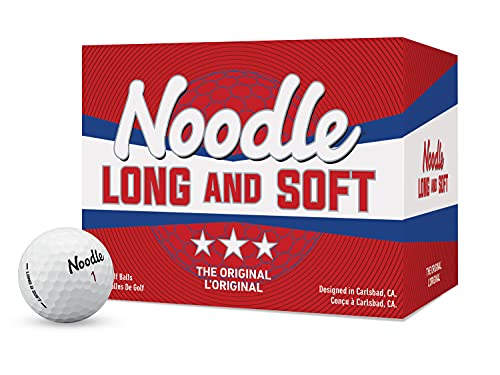
Noodle Long & Soft takes a plainspoken approach to beginner golf. Its impact propulsion core is intended to support longer carry, while the soft iothane cover adds a gentler feel and durability for everyday play. The combination is easy to understand for someone standing in a golf shop wondering whether they need a sophisticated multi-layer ball.
The patented dimple design is aimed at a straighter flight, and the listing also identifies increased spin around the greens. That gives this ball a useful balance between tee-shot simplicity and basic short-game function. It will not eliminate poor contact or an open clubface, yet its design brief suits golfers who want a familiar-looking ball with a soft cover and a practical all-around orientation.
Pros
- Impact propulsion core is intended to support longer carry.
- Soft iothane cover provides a comfortable feel and documented durability focus.
- Dimple design is aimed at a straighter flight pattern.
- Greenside spin positioning adds short-game usefulness.
- Simple construction story is approachable for first-time buyers.
Cons
- Standard white appearance offers fewer visibility benefits than patterned or colored choices.
- Available information gives less detail about alignment features than some competing balls.
Noodle Long & Soft works well for a beginner who wants a traditional white ball and a balanced set of stated features without chasing technical terminology. It is especially comfortable as an everyday practice and casual-round option. Golfers who want a clear putting line, a large pack, or a very distinctive appearance should look at Distance+, Profile Distance, or SpeedSoft Ink.
To buy this product, click here.
9. Amazon Basics Core Soft Golf Balls: Best for Alignment Practice
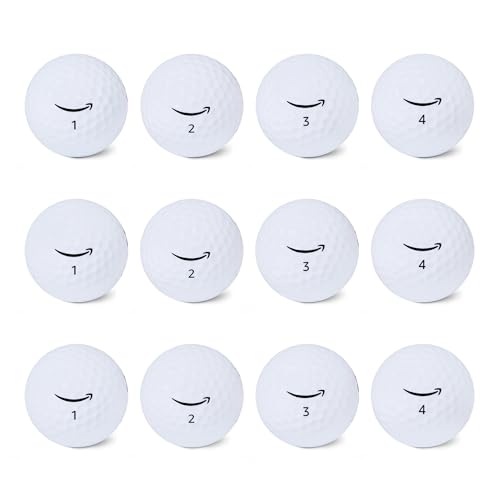
Putting can feel like a small detail until a beginner watches a short putt slide past the edge of the cup. Amazon Basics Core Soft includes a side-stamp alignment feature that gives new golfers a visible reference for aiming the ball and setting the putter face. The low-compression design is also intended to provide soft feel, distance, and a straight-flight profile for broad use across the bag.
The white cover keeps the ball conventional and easy to recognize, while the listed construction includes an advanced core and cover aimed at short-game control. This is a sensible option for someone building a repeatable practice routine at home or on the putting green. It is less distinctive than the multicolor and ink-pattern choices, but its straightforward alignment aid may be more useful than flashy graphics for a golfer learning the basics.
Pros
- Side-stamp alignment feature supports a repeatable putting routine.
- Low-compression design is intended to provide a soft feel.
- Core and cover are positioned for distance and straight-flight performance.
- White cover offers familiar visibility during play.
- Suitable for golfers who want one ball across clubs and skill levels.
Cons
- Plain white finish is less visually distinctive than colored or graphic alternatives.
- Golfers seeking specialized greenside or flight characteristics have fewer documented details here.
Choose Core Soft if alignment is the part of golf that currently feels most confusing. The side stamp can give a beginner a simple pre-putt task: aim the line, square the face, and make the stroke. Golfers who are losing several balls per round may want a larger package, while players who care more about greenside feel may prefer TruFeel or Supersoft.
To buy this product, click here.
Buying Guide
Start with Feel, but Do Not Stop There
A soft-feeling ball can make mishits feel less jarring, which may help a beginner stay relaxed after a thin iron or a weak drive. Supersoft, SpeedSoft Ink, TruFeel, Noodle, and Core Soft all emphasize softer response in different ways. Feel is personal, though. A golfer who likes a crisp strike may prefer a firmer sensation, so use the first few rounds to notice what feels comfortable rather than assuming softer is automatically better.
Think About Construction
Two-layer designs such as TaylorMade Distance+ and Wilson Chaos keep the construction relatively simple and are often suited to recreational distance-focused play. Other balls use a more detailed core and cover arrangement to balance full-shot performance with greenside control. Beginners do not need to memorize every layer, but construction gives useful clues about the ball’s intended personality.
Match Visibility to Your Course
White remains the familiar choice, yet colored and patterned balls can be easier to identify in a crowded golf bag or among several playing partners. Red, multicolor, and ink-pattern options each look different against grass, leaves, and sky. If you often play in dim conditions, test visibility before committing to a full supply, since a color that pops in sunlight may blend into autumn leaves or shadows.
Look for Alignment Help If Putting Feels Difficult
A side stamp or alignment line does not fix a poor stroke, but it can make setup more consistent. TaylorMade Distance+ and Amazon Basics Core Soft include documented alignment features. That small visual reference can be useful during practice because it separates aiming the ball from making the stroke, two tasks that beginners often blend together.
Choose Package Quantity Based on Your Learning Curve
If you are still sending balls into water hazards and deep rough, a larger pack can keep the round moving and remove some pressure. Wilson Profile Distance offers 36 balls, while Wilson Chaos provides 24. A smaller package may make more sense for a golfer who rarely loses balls or who wants to compare a ball’s feel before buying more.
Do Not Expect a Ball to Repair a Swing
A golf ball can be suited to a certain feel, flight intention, or visibility preference, but it cannot erase an open clubface or an inconsistent swing path. Spin-reducing language should be read as a design goal rather than a promise that hooks and slices vanish. Basic lessons, practice, and better contact will have a larger effect on development than switching between several balls every few holes.
Best Golf Balls for Beginners FAQ
What Type of Golf Ball Is Best for a Beginner?
A beginner will often benefit from a ball with a comfortable feel, useful distance characteristics, and enough durability for regular play. Callaway Supersoft is the most balanced choice in this roundup, while TaylorMade Distance+ suits golfers who care most about distance and alignment. The best match still depends on visibility, package quantity, and how much attention you give the short game.
Are Soft Golf Balls Better for Beginners?
Soft balls can feel more comfortable on mishits and short shots, which many new golfers appreciate. They are not automatically better for every swing or every player. Consider the full design, including the core, cover, flight profile, and greenside features, instead of choosing solely by the word “soft.”
Should Beginners Use Colored Golf Balls?
Colored balls can make identification easier, especially when several golfers are using similar white balls. Visibility depends on the specific color, grass, light, and weather. Red, multicolor, and ink-pattern options are useful alternatives, but a traditional white ball may remain easiest to follow in bright conditions.
Do Golf Balls Help Beginners Hit Straighter?
Some models use dimple patterns or design positioning aimed at reduced spin or a straighter flight. That does not mean the ball corrects a slice or hook. Clubface control, swing path, contact, and alignment remain the main factors behind direction.
How Many Golf Balls Should a Beginner Carry?
The right number depends on how often you lose balls and whether you practice between rounds. A golfer who is new to full swings may appreciate a larger supply such as the Wilson Profile Distance 36-pack. If you usually finish with the same ball, a standard dozen may be easier to carry and compare.
Is a Two-piece Golf Ball Suitable for Beginners?
Yes. A two-piece ball can offer a simple, distance-oriented design that suits casual play and developing swings. TaylorMade Distance+ and Wilson Chaos are examples in this roundup. A beginner who wants more emphasis on short-game feel may prefer a different construction, but two-piece design is not a problem by itself.
Should I Use the Same Golf Ball for Every Club?
Using one model throughout a round gives you a consistent feel and makes it easier to learn how the ball reacts. Switching constantly can make it harder to separate equipment differences from swing differences. Start with one suitable model, then compare another only after you have a clear reason, such as wanting more visibility or a different greenside response.
Final Verdict
For a first regular ball, Supersoft is the soft-feel starting point, while Distance+ offers a clearer distance-oriented brief. TruFeel and the e6 are useful alternatives if their response feels more natural on chips and putts. Choose one model you can comfortably replace and spend enough time with it to recognize the short-game feel.
Before buying a large box, compare a sleeve through ordinary shots rather than judging one unusually good drive. A beginner practicing twice a week benefits from familiar feedback, and a visible finish can help keep that same ball in play. Pack size and paint belong in the buying choice after the model has earned its place.
