
At the end of a long golf day, a ball that feels harsh off the driver can make every missed fairway feel worse. Many older golfers look for golf balls that launch easily, feel soft on contact, and remain visible against bright grass or a cloudy sky. The right choice can make the game feel more comfortable, especially for players whose swing speed has gradually changed over time.
A common mistake is choosing a ball because it carries a senior label or promises extra distance without checking the construction behind that claim. Swing speed, short-game preferences, visibility, alignment markings, and tournament requirements all matter. A low-compression ball may feel easier to compress, while a urethane-covered model may provide a more refined response around the green. Those benefits come with trade-offs, so the best fit depends on whether a golfer values launch, feel, distance-oriented design, control, or simple everyday play.
This guide compares nine distinct options, ranging from low-compression recreational balls to premium tour-style construction. Some are suited to slower or moderate swing speeds, while others make more sense for golfers who still want a penetrating flight and extra greenside control. The strongest choices are separated by practical use rather than marketing language, giving each golfer a clearer path to the ball that fits their game.
Quick Answer
- Soft-Feel Starting Point: Callaway Golf Supersoft Golf Balls (2025, White).
- Another Soft-Feel Model: Bridgestone Golf e6 Soft White.
- Control-Oriented Alternative: Titleist Pro V1 Golf Balls.
Comparison Table
| Product | Best Fit | Useful Feature | Main Trade-Off |
|---|---|---|---|
| Callaway Golf Supersoft Golf Balls (2025, White) | Best Overall | HyperElastic SoftFast core is built around speed with a soft feel. | White may be harder to track than yellow in cloudy conditions or long rough. |
| TaylorMade Golf Distance+ Golf Balls, Yellow | Best for Distance-Oriented Play | REACT Speed Core is built for a high-velocity response. | Ionomer cover is less specialized than a premium urethane cover. |
| Titleist TruFeel | Best for Soft Feel and Familiar Brand Design | TruTouch core emphasizes long distance with a soft feel. | Low-flight positioning may not suit golfers seeking a high launch. |
| TaylorMade Noodle Long & Soft | Best for Straightforward Recreational Play | Distinct model with a straightforward recreational identity. | The product name does not establish a measured distance advantage. |
| Srixon Soft Feel Golf Balls, Soft Feel 14 | Best Low-Compression Choice | Low-compression design suits slower and medium swing speeds. | Golfers who prefer a firm, high-feedback ball may find it too soft. |
| Amazon Basics Core Soft Golf Balls, 24-Pack Yellow | Best for Visibility and Alignment | Yellow cover improves visibility for many playing conditions. | Core Soft construction is less specialized than premium tour designs. |
| Titleist Pro V1 Golf Balls | Best Premium Option | Soft cast urethane cover is positioned for greenside spin. | Premium construction may be unnecessary for golfers focused only on basic distance. |
| Bridgestone Golf e6 Soft White | Best for Soft Distance Design | Softer, larger core is built around faster compression. | product description does not identify detailed layer or dimple specifications. |
| Callaway Warbird | Best for a Distance-Focused Recreational Option | Different model from Callaway Supersoft. | Distance positioning is not independent evidence of a yardage gain. |
1. Callaway Golf Supersoft Golf Balls (2025, White): Best Overall

The 2025 Callaway Supersoft is a strong all-around match for senior golfers who want a comfortable ball without giving up a distance-oriented design. Its HyperElastic SoftFast core is built to support faster driver and iron speed while retaining a soft feel around the green. That combination matters on a typical Saturday round, where a golfer may want a lively response on a tee shot but a gentler feel when putting from a few feet.
The hybrid cover adds another layer of versatility. Callaway positions it for distance, durability, and greenside control, so the ball makes sense for golfers who move between casual rounds and more deliberate short-game practice. The white finish offers a familiar appearance and works well for players who already track their ball confidently in the air. It is a balanced pick rather than a specialist tool, which gives it broad appeal across moderate and slower swing speeds.
Pros
- HyperElastic SoftFast core is built around speed with a soft feel.
- Hybrid cover supports distance-focused play and greenside control.
- Suitable for golfers who want one ball for tee shots, irons, and putting.
- White finish provides a traditional appearance and easy identification.
- 2025 construction gives buyers a current Supersoft generation.
Cons
- White may be harder to track than yellow in cloudy conditions or long rough.
- Golfers seeking tour-level urethane control may prefer a premium construction.
This is the best starting point for a senior golfer who wants soft contact and a versatile design without narrowing the choice to one part of the game. Players who regularly compete under formal rules should still check their event requirements, while golfers who struggle to see white balls may prefer a yellow alternative. For everyday rounds, this Supersoft offers a sensible blend of comfort, launch, and short-game usefulness.
To buy this product, click here.
2. TaylorMade Golf Distance+ Golf Balls, Yellow: Best for Distance-Oriented Play
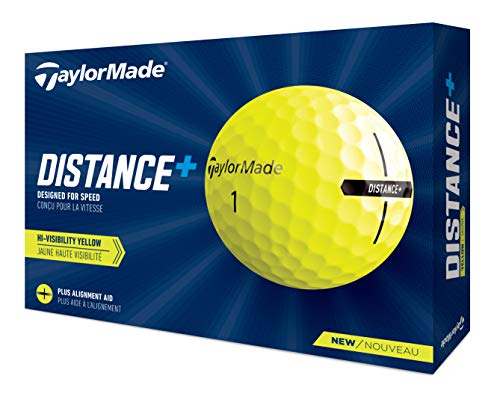
TaylorMade Distance+ takes a straightforward approach for golfers who want a ball built around speed and visibility. The two-layer construction uses a REACT Speed Core, while the Extended Flight Dimple Pattern is intended to help the ball stay airborne through the drive. For a senior golfer who watches a drive climb into a breezy fairway and wants a little more help maintaining flight, that design focus is easy to understand.
The yellow cover is practical beyond appearance. It can make the ball easier to follow against darker grass, shaded fairways, or an overcast sky. A Plus Alignment Aid also gives the player a visible reference for lining up putts. This is a useful choice for casual rounds and golfers who prefer a simple, distance-oriented ball rather than a highly specialized short-game model.
Pros
- REACT Speed Core is built for a high-velocity response.
- Extended Flight Dimple Pattern is intended to support longer airborne flight.
- Yellow finish improves visibility for many playing conditions.
- Plus Alignment Aid gives a clear putting reference.
- Two-layer construction keeps the design straightforward.
Cons
- Ionomer cover is less specialized than a premium urethane cover.
- Distance-first positioning may not suit golfers prioritizing delicate greenside feel.
Distance+ belongs in the bag of a senior golfer who wants a bright ball, a visible alignment mark, and a clear emphasis on speed. It may be less appealing to a player who spends much of the round shaping approach shots or demanding maximum wedge response. For a relaxed round where finding the ball and keeping the game moving matter, the yellow finish is a useful practical touch.
To buy this product, click here.
3. Titleist TruFeel: Best for Soft Feel and Familiar Brand Design

Titleist TruFeel is aimed at golfers who want a distinctly soft response while staying with a well-known golf-ball design. Its TruTouch core is paired with a 3.0 TruFlex cover, giving the construction a feel-first character. A golfer who dislikes the sharp click of a firm ball may appreciate this orientation, especially on short putts where sound and contact can influence confidence.
The 376 tetrahedral dimple design is associated with a low penetrating flight, which gives TruFeel a different personality from higher-launch options. That can suit a senior player who prefers a flatter-looking ball flight or regularly plays in conditions where a penetrating trajectory feels more predictable. The cover is also positioned for increased greenside spin and control, although golfers should not expect the same type of response as a premium urethane ball.
Pros
- TruTouch core emphasizes long distance with a soft feel.
- TruFlex cover is positioned for greenside control.
- Low penetrating flight suits golfers who dislike a high ball flight.
- 376-dimple pattern gives the model a clearly defined aerodynamic design.
- Strong option for players who value Titleist familiarity.
Cons
- Low-flight positioning may not suit golfers seeking a high launch.
- Its cover is less advanced than the urethane cover used on premium tour balls.
TruFeel fits senior golfers who want a soft ball with a lower flight and a recognizable brand design. It may be less suitable for a player who needs help creating height or wants a yellow cover for easier tracking. If a soft click at the putter face and controlled-feeling short shots are high on the list, this model deserves attention.
To buy this product, click here.
4. TaylorMade Noodle Long & Soft: Best for Straightforward Recreational Play
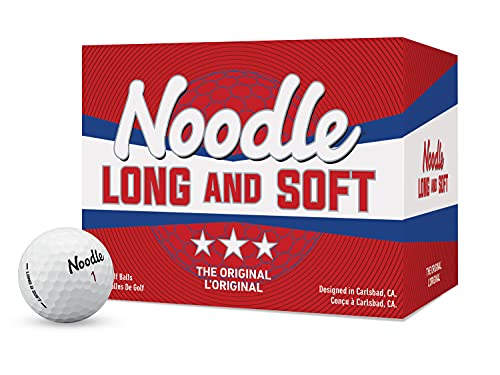
The Noodle Long & Soft gives this shortlist a different ball model with a simple brief: distance-oriented recreational play and a soft-feel identity. Its straightforward identity can appeal to someone who wants a consistent ball for ordinary rounds. Imagine a relaxed nine-hole round where the spare sleeve is likely to get used before the final tee. You can put this model beside your regular ball and compare the whole round, rather than expecting an expensive badge to make a rough swing behave.
The practical appeal is the uncomplicated choice, but the words Long & Soft are a product name rather than a personal distance guarantee. A smooth player and a fast, abrupt swinger can get different results from the same ball. Try a few chips before deciding whether the response around the green suits you, then compare tee shots under similar conditions. If you need a specific premium-cover spin profile or specialized flight window, those priorities deserve a closer look at other models instead of being inferred from the name.
Pros
- Distinct model with a straightforward recreational identity.
- Soft-feel positioning provides a useful comparison point.
- Distance-oriented brief suits casual full-round play.
- An alternative to adding another premium tour-style model.
- Simple model name is easy to keep consistent across purchases.
Cons
- The product name does not establish a measured distance advantage.
- Golfers prioritizing specialized greenside control may prefer a premium-cover alternative.
Put the Noodle on your shortlist for everyday golf rather than a promised transformation. A golfer practicing twice a week may care as much about keeping the same ball feel as chasing a few theoretical yards. Compare the actual pack price per ball, then let chips, putts, and solid strikes decide whether the trade-off works. For senior golfers, current swing and short-game preferences matter more than age printed on a package.
To buy this product, click here.
5. Srixon Soft Feel Golf Balls, Soft Feel 14: Best Low-Compression Choice

Srixon Soft Feel is a natural fit for senior golfers who want low-compression construction and a gentle response without moving into a highly specialized ball. The high-energy core is intended to support ball speed, while the low-compression design is aimed at slower and medium swing speeds. That combination can feel appealing on a cool morning when the clubface and hands both seem less lively.
The 338 Speed Dimple Pattern gives the ball an aerodynamic focus, while the thin cover is described as reducing driver spin and adding greenside spin. That split is useful for golfers who want a distance-oriented tee ball but still appreciate a softer feel on pitches, chips, and putts. Srixon also positions Soft Feel as an affordable performance option, making it a practical model for regular play.
Pros
- Low-compression design suits slower and medium swing speeds.
- High-energy core is built around distance-focused ball speed.
- 338 Speed Dimple Pattern supports the aerodynamic design.
- Thin cover is positioned for less driver spin and more greenside response.
- Soft Feel construction works across the bag.
Cons
- Golfers who prefer a firm, high-feedback ball may find it too soft.
- Its low-compression focus may not suit every faster-swinging player.
Soft Feel makes sense for the golfer who wants a comfortable ball that does not feel overly specialized. It can bridge the gap between a basic distance ball and a premium short-game model, especially for a senior player with a slower or moderate swing. Players who prefer a firm impact sensation or a distinctly high flight may wish to compare it with a different construction.
To buy this product, click here.
6. Amazon Basics Core Soft Golf Balls, 24-Pack Yellow: Best for Visibility and Alignment

Amazon Basics Core Soft is built for straightforward everyday play. The low-compression core is paired with a yellow durable cover, giving the ball two features that many senior golfers appreciate: soft impact and easier tracking. A bright ball can save time in rough or low light, particularly for players who would rather spend the afternoon hitting shots than searching through leaves.
The side stamp alignment feature adds a useful putting reference without requiring a separate marker. The product is described as suitable for all skill levels and USGA conforming, which gives it broader practical use than a ball intended only for casual recreation. The 24-pack format also suits golfers who lose a few balls during a round or prefer to keep a large supply in the garage or trunk.
Pros
- Yellow cover improves visibility for many playing conditions.
- Low-compression core provides a soft-feeling design.
- Side stamp offers a built-in putting alignment aid.
- 24-pack format is practical for frequent rounds.
- USGA-conforming positioning supports regular course play.
Cons
- Core Soft construction is less specialized than premium tour designs.
- Golfers who prefer white balls may find yellow less familiar at address.
This is a sensible pick for a senior golfer who values visibility, simple alignment, and a generous supply of balls. It may be less attractive to a golfer who wants a highly nuanced wedge response or a particular trajectory profile. For casual rounds, league play, and golfers who occasionally lose a ball in the rough, the practical features carry real weight.
To buy this product, click here.
7. Titleist Pro V1 Golf Balls: Best Premium Option

Titleist Pro V1 is the premium choice in this group for senior golfers who still value shot control and a more advanced cover construction. Its faster high-gradient core is paired with a high-flex casing layer, while the soft cast urethane elastomer cover is positioned for greenside spin. This makes the ball more relevant to players who shape approach shots, flight iron shots, and pay close attention to how a chip releases.
The Pro V1 is described as having a softer feel, lower long-game spin, and a penetrating flight compared with the Pro V1x. That profile can suit a golfer who has retained a consistent swing and wants control rather than a simple low-compression distance solution. A senior golfer does not automatically need a soft recreational ball, and Pro V1 shows why fitting the ball to the player matters more than age alone.
Pros
- Soft cast urethane cover is positioned for greenside spin.
- High-gradient core supports a premium speed and control design.
- High-flex casing layer is intended to reduce long-game spin.
- 388 tetrahedral dimple design supports a consistent penetrating flight.
- Strong match for golfers who value iron and wedge response.
Cons
- Premium construction may be unnecessary for golfers focused only on basic distance.
- Players with slower swings may prefer a lower-compression design with an easier-launch character.
Pro V1 is for the senior golfer who still plays with a control-oriented mindset and wants a premium ball from tee to green. It is less compelling for someone who rarely uses greenside spin or frequently loses balls. If a golfer spends time practicing chips, pitches, and approach shots, the urethane cover gives this model a clear reason to move up the list.
To buy this product, click here.
8. Bridgestone Golf e6 Soft White: Best for Soft Distance Design

Bridgestone e6 Soft keeps its message simple: soft feel and long-distance design. The product description highlights a softer, larger core intended to compress faster and support longer distance, along with a soft seamless cover for added spin and feel. That makes the ball appealing to golfers who want a comfortable strike without sorting through a long list of complicated technologies.
Picture a golfer playing a morning round with a smooth tempo rather than a forceful swing. A ball built around quicker compression can feel like a sensible match for that rhythm, while the seamless cover speaks to control around the green. The available information does not provide a compression number or measured performance result, so this ball should be viewed through its design intent rather than assumed distance gains.
Pros
- Softer, larger core is built around faster compression.
- Soft feel suits golfers who dislike firm impact.
- Seamless cover is positioned for spin and feel.
- Simple construction message makes the model easy to evaluate.
- White finish provides a traditional ball appearance.
Cons
- product description does not identify detailed layer or dimple specifications.
- Golfers seeking a premium urethane cover may prefer a different model.
e6 Soft suits a golfer who wants a soft ball with a direct distance-oriented purpose and does not need extensive alignment features. It may be less suitable for players comparing exact launch or spin profiles. For a relaxed round with a smooth swing and a preference for simple equipment choices, it remains a credible alternative to the more feature-heavy options.
To buy this product, click here.
9. Callaway Warbird: Best for a Distance-Focused Recreational Option

Warbird takes a distance-focused approach for recreational golfers comparing everyday ball choices. That distinction helps a buyer deciding between a softer-feeling priority and a straightforward distance-ball brief. Think of a wide par four on a friendly course: you can evaluate how the ball launches and feels on a solid drive without pretending the name promises a longer result for every golfer.
The buying calculation still has to include the green. A ball chosen for tee-shot priorities may ask you to allow a different amount of release on a short pitch than your usual premium model. On a second scenario, a narrow hole with thick rough makes replacement cost and visibility more relevant than an impressive claim on the box. Compare the actual number of balls and the checkout price, then play several holes with the same model so that one lucky bounce does not become your entire review.
Pros
- Different model from Callaway Supersoft.
- Clear distance-oriented positioning.
- Useful for recreational full-round comparisons.
- Offers a practical alternative to tour-style control models.
- Can be assessed on both tee shots and ordinary approach shots.
Cons
- Distance positioning is not independent evidence of a yardage gain.
- Short-game-first players should compare a premium control-oriented ball.
Warbird fits the golfer who wants to compare a conventional distance-focused option on real holes. A sensible pack price matters, but so does knowing how far a short pitch releases. Give those little shots some attention before buying a large supply, because the ball still has work to do after the drive lands. For senior golfers, current swing and short-game preferences matter more than age printed on a package.
To buy this product, click here.
Buying Guide
Match the Ball to Swing Speed
Age alone does not determine the right golf ball. Swing speed, tempo, contact quality, and preferred trajectory matter more. Golfers with slower or moderate swings may appreciate low-compression designs such as Srixon Soft Feel or the low-compression Amazon Basics Core Soft. A senior golfer with a stronger, consistent swing may prefer the control profile of Titleist Pro V1 instead.
Decide How Much Feel You Want
A soft ball can feel pleasant off the putter and wedges, while a firmer model may provide a sharper response. Soft feel is a preference, not a guarantee of longer shots. Pay attention to whether you prefer a muted impact sound, a lively tee-shot response, or more detailed feedback around the green.
Think About Flight
Some balls in this guide emphasize a higher launch, while Titleist TruFeel and Pro V1 are associated with a more penetrating flight. A golfer who struggles to create height may lean toward an easy-launch, lower-compression option. A player who already launches the ball high may prefer a penetrating design.
Choose Visibility Carefully
Yellow balls can be easier to track in shaded areas, cloudy weather, and longer rough. White remains familiar and may be easier for some players to follow against the sky. Alignment markings also matter. TaylorMade Distance+ and Amazon Basics Core Soft include visible alignment features that can help create a repeatable putting routine.
Check the Cover Material
Ionomer and Surlyn covers are common in distance-focused and recreational balls, while urethane is associated with premium greenside control. A urethane ball can make sense for a golfer who practices chips and pitches and wants a more specialized response. Golfers who lose several balls per round may prefer a simpler, more durable-oriented construction.
Review Tournament Requirements
The MG Senior Golf Ball is identified as non-conforming for most USGA-sanctioned tournaments. That makes it a recreational choice rather than a universal competition ball. Players in leagues or organized events should verify the applicable rules before putting it into tournament play.
Best Golf Balls for Seniors FAQ
What Type of Golf Ball Is Usually Suitable for Seniors?
A ball with a soft feel and a design suited to the golfer’s swing speed is often a sensible starting point. Low-compression models may appeal to slower or moderate swing speeds, while stronger senior golfers may prefer a premium ball with more short-game control.
Are Low-compression Golf Balls Always Better for Older Golfers?
No. Low compression can suit some slower swing speeds, but golfers have different tempos, launch conditions, and feel preferences. A senior golfer with a strong swing may prefer a firmer or premium construction, so age should not be the only selection factor.
Do Yellow Golf Balls Help Seniors See Their Shots?
Yellow can improve visibility for many golfers, especially in cloudy weather, shaded fairways, and longer grass. It is not automatically easier for every player, so the best color depends on eyesight, course conditions, and personal preference.
Are Senior Golf Balls Legal for Tournament Play?
Many mainstream golf balls are intended for regular conforming play, but individual products can differ. The MG Senior Golf Ball in this guide is identified as non-conforming for most USGA-sanctioned tournaments. Check the product designation and event rules before competing.
Should Seniors Choose a Soft Ball or a Premium Urethane Ball?
Choose based on how you play. A soft distance-oriented ball suits golfers who want comfortable contact and straightforward performance. A premium urethane ball is more relevant to players who actively value greenside spin, wedge control, and a more detailed short-game response.
Can a Golf Ball Fix a Slice?
No golf ball can correct a swing path or face-angle problem. Ball construction may influence feel, launch, and spin characteristics, but reducing a slice requires changes in technique, equipment fitting, or both.
How Important Are Alignment Markings?
Alignment markings can provide a repeatable visual reference for putts. They do not guarantee better accuracy, but golfers who like to aim the ball before addressing a putt may find a side stamp or alignment aid useful.
Final Verdict
Supersoft and the e6 are sensible soft-feel comparisons for a senior golfer who wants a comfortable recreational ball. Pro V1 remains relevant for someone whose wedge control is a bigger priority than minimizing replacement cost. The age on a scorecard does not decide between those approaches; the shots you play do.
Distance+, Noodle, and Warbird add distance-oriented alternatives without relying on an oversized recreational ball outside normal competition use. Compare carry, chips, and putting feel with your own clubs. If the new ball feels pleasant but leaves every pitch releasing farther than expected, that is a practical trade-off to resolve before buying another dozen.
