
A golf ball can make a round feel either pleasantly predictable or strangely elusive. One player wants a soft ball that settles quickly on the green, while another wants a firmer, higher-flying option that holds its line through a windy afternoon. The search for the best golf balls usually starts with distance, but feel, cover material, flight, short-game control, visibility, and swing characteristics can matter just as much.
A common mistake is choosing a ball because it is popular, expensive, or attached to a tour name without asking whether its design fits your game. A urethane-covered ball may offer a stronger short-game focus, while a two-layer ionomer model can make more sense for casual rounds and frequent lost-ball situations. Soft feel also means different things to different golfers, so the right choice depends on your swing, contact, preferred trajectory, and how much attention you give to wedge and putting performance.
This guide compares nine relevant options, from premium Titleist and Vice models to softer distance-oriented balls from Callaway and TaylorMade. The selection includes standard white balls, high-number versions, and a yellow option for golfers who value easier visual tracking. Each review focuses on documented construction and intended use, so you can narrow the field without treating manufacturer claims as guaranteed results.
Quick Answer
- Control-Oriented Starting Point: Titleist Pro V1 Golf Balls.
- Soft Recreational Alternative: Bridgestone e6.
- Everyday Supply Comparison: Wilson Chaos.
Comparison Table
| Product | Best Fit | Useful Feature | Main Trade-Off |
|---|---|---|---|
| Titleist Pro V1 Golf Balls | Best Overall | Soft feel compared with the higher-flying Pro V1x profile. | Premium construction may be more than casual golfers need. |
| Bridgestone e6 | Best for a Soft Recreational Alternative | Distinct soft-feel recreational model. | Soft feel does not prove a personal distance advantage. |
| Callaway Supersoft Golf Balls | Best Soft-Feel Alternative | HyperElastic SoftFast core is engineered for speed with a soft feel. | It may offer less specialized short-game performance than a premium urethane ball. |
| Wilson Chaos | Best for a Recreational Supply Comparison | Two-piece recreational construction has a clear everyday role. | A recreational distance-style brief is less specialized for premium wedge control. |
| Titleist Pro V1x | Best for Higher Flight | Higher-flight positioning suits golfers who want more trajectory. | Higher flight may be less suitable for golfers who already launch the ball high. |
| Titleist TruFeel | Best Ultra-Soft Titleist Option | Ultra-soft feel is central to the design. | It lacks the more specialized premium construction of the Pro V1 family. |
| TaylorMade Distance+ | Best for Distance-Oriented Casual Play | REACT Speed Core is engineered for high-velocity performance. | Two-layer construction offers less specialized control than a multilayer urethane ball. |
| TaylorMade SpeedSoft Ink | Best for High-Contrast Visibility | Ink design provides a distinctive high-contrast appearance. | The bold appearance may not suit golfers who prefer a traditional ball. |
| Vice Golf Pro Plus | Best for Higher-Swing-Speed Players | Four-piece construction supports a more specialized performance profile. | Its high-swing-speed focus may be unnecessary for many casual golfers. |
1. Titleist Pro V1 Golf Balls: Best Overall

The Pro V1 earns the top spot because its design addresses the broadest range of serious golf-ball priorities without leaning too heavily toward one extreme. Its softer feel, lower long-game spin positioning, and penetrating flight suit players who want to flight iron shots and keep tee shots from climbing excessively. The 388 tetrahedral dimple pattern is intended to support a consistent flight, while the cast urethane elastomer cover gives the ball a stronger short-game identity than a basic distance model.
For a golfer standing over a delicate pitch shot with a bunker between the ball and the flag, the Pro V1’s appeal is easy to understand. The core is built for speed, yet the cover is intended to provide iron, wedge, and greenside control. That combination makes it a versatile option for players who use different trajectories rather than hitting every shot at maximum height. It is a premium choice, so it makes the most sense for golfers who can take advantage of its control-focused construction.
Pros
- Soft feel compared with the higher-flying Pro V1x profile.
- Low long-game spin positioning supports a penetrating flight.
- Urethane cover is suited to wedge and greenside control.
- 388 tetrahedral dimple design is intended to promote consistent flight.
- Balanced construction works across tee shots, iron play, and short-game shots.
Cons
- Premium construction may be more than casual golfers need.
- Lower flight characteristics may not suit players seeking maximum height.
The Pro V1 is the best fit for golfers who want one ball for the full bag and care about the feel of chips, pitches, and putts as much as tee-shot distance. Players who mainly lose balls or rarely notice cover and trajectory differences may get more practical value from a simpler two-layer model. For everyone else, this is the most complete choice in the group because it balances distance-oriented core design with a clearly defined short-game focus.
To buy this product, click here.
2. Bridgestone e6: Best for a Soft Recreational Alternative

The e6 gives a broad golf-ball comparison a useful soft-feel, distance-oriented direction. Bridgestone positions the model around those priorities, making it an alternative for a golfer who finds a premium tour-style ball firmer or more specialized than the round requires. Imagine a relaxed afternoon with a familiar driver and no launch monitor in sight: the sensible trial is whether the impact response feels comfortable and the ordinary approach shots behave predictably.
That trial still needs a few short-game shots. A golfer who likes the e6 on a tee shot may prefer another cover response when pitching over the front of a green. In a second situation, a player who loses several balls into heavy rough may give replacement cost more weight than a particular wedge-spin profile. Compare the exact pack price per ball and keep the model consistent while learning its behavior. A softer impact is a preference, rather than independent evidence that every swing will gain carry.
Pros
- Distinct soft-feel recreational model.
- Distance-oriented positioning supplies a clear buying brief.
- Provides an alternative to tour-style control models.
- Can be compared through ordinary full-round shots.
- Keeps a soft-feel option in the range of different constructions.
Cons
- Soft feel does not prove a personal distance advantage.
- A wedge-control-first player should also compare premium urethane models.
Choose e6 when its soft recreational brief matches the way you play. Compare it against one familiar ball through tee shots, chips, and putts instead of moving between models after every mishit. If the short-game response suits you as well as the driver feel, you have a clearer reason to make it your regular purchase.
To buy this product, click here.
3. Callaway Supersoft Golf Balls: Best Soft-Feel Alternative

Callaway’s Supersoft is aimed at golfers who like a gentle feel at impact without giving up a distance-oriented design. Its HyperElastic SoftFast core is engineered for faster ball speed with the driver and irons, while the hybrid cover is intended to combine distance, soft feel, and durability. That makes the ball easy to understand for a golfer who wants a comfortable response on a chilly morning or a relaxed weekend round.
The appeal is strongest around the everyday parts of golf. A player who hits a low punch from trouble, clips a short iron, and then rolls a putt across a fast green may prefer a ball that feels consistent rather than clicky. The updated cover system is positioned for greenside control, but this remains a softer, distance-minded model rather than a tour-style urethane ball. Its balance suits recreational players who want a forgiving-feeling option across the bag.
Pros
- HyperElastic SoftFast core is engineered for speed with a soft feel.
- Hybrid cover combines distance-oriented design with everyday durability.
- Soft greenside response suits golfers who dislike a firm impact sensation.
- Cover system is intended to support approach and short-game control.
- Broad appeal for casual and improving golfers.
Cons
- It may offer less specialized short-game performance than a premium urethane ball.
- Golfers seeking a firmer, higher-flight tour profile may prefer another option.
Choose Supersoft if comfort and straightforward play matter more than extracting every possible level of short-game feedback. It is especially suitable for golfers who are still developing consistent contact and want a ball that feels pleasant on mishit-prone shots. Players with a highly developed wedge game may prefer the more specialized response of the Pro V1, Pro V1x, or Vice Pro Plus.
To buy this product, click here.
4. Wilson Chaos: Best for a Recreational Supply Comparison

Wilson Chaos adds a recreational ball model to a list that can otherwise become dominated by premium tour-style choices. Its two-piece design and durable-cover brief make it a sensible comparison for golfers thinking about an ordinary supply of balls rather than a specialized scoring tool. Picture a course lined with long rough: a model you are comfortable replacing can make the equipment choice feel less precious, while contact and sensible targets still do the work.
The available finish and pack count are part of the purchase, so check the selected option instead of assuming every Chaos box contains the same assortment. A colored finish can help one golfer track a ball in flat light, while another may prefer a conventional white view on the green. On a second scenario, a short pitch to a firm surface may show why a premium urethane option remains attractive for a control-focused player. Treat Chaos as a recreational construction choice and compare its release with the shots you normally play.
Pros
- Two-piece recreational construction has a clear everyday role.
- Durable-cover brief suits regular play and practice.
- Provides a different model from the premium urethane selections.
- Finish options can support a personal visibility preference.
- Pack quantity can be matched to how often you replace balls.
Cons
- A recreational distance-style brief is less specialized for premium wedge control.
- A larger pack is poor value if the feel or selected finish does not suit you.
Chaos is worth comparing if supply, visibility, and everyday use shape your buying decision. A player practicing often may value a familiar response and manageable replacement cost. A player whose round depends on a particular pitch-shot reaction should spend more time with the control-oriented models before choosing by package quantity.
To buy this product, click here.
5. Titleist Pro V1x: Best for Higher Flight

The Pro V1x takes the premium Titleist formula in a higher-flying direction. It is aimed at players seeking maximum distance, higher flight, and more stopping power, with a faster high-gradient dual core and a 348 tetrahedral dimple design. That profile can appeal to golfers who need shots to climb and land with a steeper arrival rather than flighting low through the air.
Imagine a long iron approaching a firm green where a shallow, low-running ball could release too far. The Pro V1x is built around the kind of higher trajectory and stopping-power intent that addresses that situation. Its cast urethane cover keeps the short game in the conversation, so the ball is more versatile than a pure distance model. Still, the higher-flight design may not suit someone who naturally launches the ball high or wants a flatter trajectory in the wind.
Pros
- Higher-flight positioning suits golfers who want more trajectory.
- Dual-core construction is engineered for speed and control.
- 348 tetrahedral dimples are optimized for a high, consistent flight.
- Urethane cover supports wedge and greenside play.
- Strong fit for players seeking stopping power on approach shots.
Cons
- Higher flight may be less suitable for golfers who already launch the ball high.
- Premium construction may be unnecessary for casual golfers.
Pick the Pro V1x if your ball flight is too flat, your approach shots need help staying on the green, or you simply prefer a higher visual window. It is a more focused choice than the Pro V1, so golfers who flight the ball low or play in frequent wind may favor the standard model. The decision is less about which ball is universally superior and more about matching trajectory to your existing shot pattern.
To buy this product, click here.
6. Titleist TruFeel: Best Ultra-Soft Titleist Option

TruFeel gives golfers a route into Titleist’s lineup with an emphasis on ultra-soft feel and a low, penetrating flight. Its TruTouch core is engineered for distance and softness, while the 3.0 TruFlex cover is intended to add greenside spin and control. The 376 tetrahedral dimple design rounds out a ball aimed at players who prefer a lower flight window and a distinctly soft sensation.
For the golfer who notices the sharp click of a firm ball on a short putt, TruFeel has an obvious appeal. It also makes sense for players who want the reassurance of a familiar golf brand without moving straight into a premium tour-style ball. The design is less specialized than Pro V1 or Pro V1x, but that simpler positioning can be useful for recreational rounds where comfort and predictable everyday use matter most.
Pros
- Ultra-soft feel is central to the design.
- TruTouch core is engineered for distance and a soft response.
- Low penetrating flight suits golfers who prefer a flatter trajectory.
- TruFlex cover is intended to add greenside spin and control.
- 376 tetrahedral dimples support the stated flight design.
Cons
- It lacks the more specialized premium construction of the Pro V1 family.
- Golfers wanting a high-flight ball may find its trajectory direction less suitable.
TruFeel is a good match for golfers who put feel near the top of the shopping list and prefer a lower ball flight. It may be less appealing to players who want maximum approach-shot stopping power or a tour-level short-game focus. Think of it as a comfortable, straightforward ball for regular play, especially if you want softness without moving to an unfamiliar brand.
To buy this product, click here.
7. TaylorMade Distance+: Best for Distance-Oriented Casual Play

TaylorMade Distance+ takes a direct approach with a two-layer construction, REACT Speed Core, ionomer cover, and extended-flight dimple pattern. The design is aimed at speed and distance, with a mid-launch profile and a Plus Alignment Aid that can help golfers line up a tee shot or putt. It is the sort of ball that fits a relaxed Saturday round where keeping play moving matters more than comparing subtle cover responses.
Suppose you are playing a course with water hazards, thick rough, and several blind tee shots. A straightforward distance ball can make sense when the priority is getting a useful ball in play without spending a premium on highly specialized short-game construction. The alignment marking adds a small practical touch, particularly for golfers who like a visual reference before starting the stroke.
Pros
- REACT Speed Core is engineered for high-velocity performance.
- Two-layer construction keeps the design straightforward.
- Extended-flight dimples are intended to help the ball stay airborne longer.
- Plus Alignment Aid supports aiming on tee shots and putts.
- Ionomer cover suits everyday recreational use.
Cons
- Two-layer construction offers less specialized control than a multilayer urethane ball.
- Golfers focused on premium greenside feedback may prefer another design.
Distance+ is best for golfers who want a simple ball with a strong distance emphasis and an alignment feature that costs little mental effort to use. It is less suitable for players who build their game around delicate wedge shots, spin manipulation, and premium cover feel. For casual golfers, newer players, and anyone who regularly plays demanding courses, its uncomplicated design has real practical value.
To buy this product, click here.
8. TaylorMade SpeedSoft Ink: Best for High-Contrast Visibility

SpeedSoft Ink brings a more distinctive look to a soft-feel distance design. Its ink pattern is intended to stand out visually, while the low-compression PWRCORE is built to provide a soft feel with fast ball speed. The ball is also positioned for forgiving everyday performance, which makes it attractive to golfers who want their equipment to be easy to see and comfortable across different types of shots.
A high-contrast ball can be handy when a white ball blends into a pale fairway or vanishes under cloudy skies. The visual design will not replace sound course management, but it may make identification faster and add a little personality to the round. Beneath the appearance, SpeedSoft is aimed at a broad audience with low-compression construction and a feel-focused response from driver through the short game.
Pros
- Ink design provides a distinctive high-contrast appearance.
- Low-compression PWRCORE is engineered for soft feel and speed.
- Suitable for golfers who want comfortable everyday performance.
- Designed to support distance through the bag.
- Visual styling can help with ball identification.
Cons
- The bold appearance may not suit golfers who prefer a traditional ball.
- It is less specialized for premium greenside spin than urethane models.
SpeedSoft Ink makes sense for recreational golfers who like soft-feeling equipment and want a ball that is easy to pick out in a group. Players who prefer a classic white appearance or a tour-oriented short-game design may want a different option. Its appeal comes from the combination of visual personality and low-compression construction, rather than from a highly specialized trajectory formula.
To buy this product, click here.
9. Vice Golf Pro Plus: Best for Higher-Swing-Speed Players
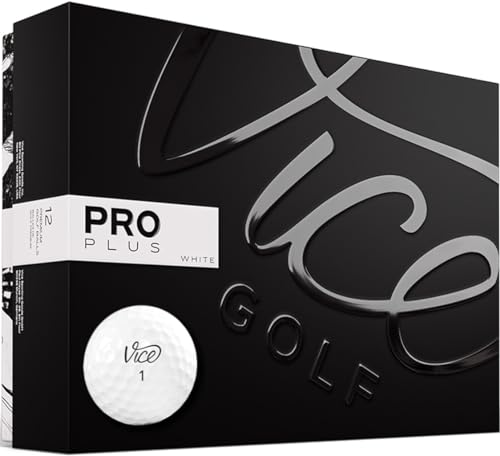
Vice Pro Plus is the most specialized ball in this group for golfers with higher swing speeds and demanding tee-to-green expectations. Its four-piece construction and extra-thin cast urethane cover are intended to combine driver distance with spin control. A closed alignment line gives the ball a cleaner aiming reference than a broad, busy marking, while the standard white finish keeps the appearance traditional.
The construction is aimed at golfers who want to separate the feel and response of a premium ball from basic two-layer distance options. A player who attacks the course with a faster swing and expects control around the green may appreciate that four-piece, urethane-focused approach. The trade-off is that specialized performance intent matters less if your main goal is simply a soft, inexpensive ball for occasional rounds.
Pros
- Four-piece construction supports a more specialized performance profile.
- Cast urethane cover is intended for tee-to-green control.
- Extra-thin cover design suits golfers seeking premium response.
- Built for players with higher swing speeds.
- Closed alignment line provides a clean aiming reference.
Cons
- Its high-swing-speed focus may be unnecessary for many casual golfers.
- Premium construction is more specialized than a basic distance ball.
Choose Pro Plus if your swing speed is higher and you want a ball that emphasizes driver distance and spin control in the same package. It is a less natural fit for golfers who mainly want an ultra-soft feel or who are still developing consistent contact. Among these nine choices, it offers one of the clearest alternatives to the Titleist models for players who prefer a four-piece urethane design.
To buy this product, click here.
Buying Guide
Match the Ball to Your Flight Preference
Start by deciding whether your natural flight is too low, too high, or reasonably balanced. Pro V1x is positioned for higher flight and stopping power, while Pro V1 and TruFeel emphasize a more penetrating trajectory. A ball cannot rebuild a swing, but choosing a design that fits your existing flight can make the visual and tactical side of golf feel more natural.
Think About Cover Material
Cover material shapes the type of response a ball is built to provide. Urethane models such as Pro V1, Pro V1x, and Vice Pro Plus are aimed at golfers who care about wedge and greenside control. Ionomer and hybrid-cover choices such as Distance+ and Supersoft are often easier to position as everyday distance and feel options. Neither category is automatically right for every player.
Prioritize Feel without Assuming It Tells the Whole Story
A soft ball can feel pleasant off the putter and short irons, especially for golfers who dislike a firm click. TruFeel, Supersoft, and SpeedSoft Ink put that sensation near the center of their designs. Feel remains personal, though, and it should be weighed beside flight, short-game needs, and the way you normally play rather than treated as a guarantee of more distance.
Consider Your Swing Speed and Contact
Vice Pro Plus is specifically positioned toward higher swing speeds, while softer everyday models appeal to a wider range of recreational players. Swing speed alone does not determine the best ball. Consistency of contact, launch preference, wedge technique, and typical course conditions all influence the better match.
Do Not Ignore Alignment Markings
Distance+ includes a Plus Alignment Aid, while Vice Pro Plus uses a closed alignment line. These markings are small, yet they can provide a useful visual reference during putting or tee setup. They will not fix aim by themselves, but they may make your pre-shot routine more repeatable.
Balance Ball Cost Against How Often You Lose Them
A premium urethane ball makes more sense for a golfer who can keep it in play and use its short-game characteristics. If water hazards, dense rough, or aggressive course layouts regularly remove balls from your bag, a simpler model may be the more practical choice. Saving a ball for the perfect swing is less useful than choosing one you can confidently play throughout the round.
Best Golf Balls FAQ
What Are the Best Golf Balls for Most Golfers?
Titleist Pro V1 is the strongest all-around choice in this selection because it combines a softer feel, penetrating flight, low long-game spin positioning, and a urethane cover aimed at greenside control. It suits golfers who want a balanced ball rather than an option built around one narrow trait.
Are Soft Golf Balls Better for Beginners?
A soft ball can be appealing to beginners because it usually provides a gentler feel on putts and shorter shots. Callaway Supersoft, Titleist TruFeel, and TaylorMade SpeedSoft Ink all emphasize soft feel. Beginners should still compare flight and visibility, since softness alone does not determine how a ball will suit a particular swing.
Should I Choose Pro V1 or Pro V1x?
Choose Pro V1 if you prefer a softer feel and more penetrating, lower flight. Choose Pro V1x if you want a higher flight and more stopping power. The better match depends on your current trajectory and the type of approach shots you want to see.
Are Urethane Golf Balls Worth Choosing?
Urethane balls are worth considering for golfers who pay attention to wedge shots, pitches, chips, and putting feel. Pro V1, Pro V1x, and Vice Pro Plus use urethane-focused construction. Golfers who mainly want distance and a comfortable everyday ball may prefer a hybrid-cover or ionomer option.
What Golf Balls Are Best for Higher Swing Speeds?
Vice Pro Plus is explicitly positioned for golfers with higher swing speeds and uses four-piece construction with a cast urethane cover. Pro V1x is another strong consideration for players who want a premium ball with higher flight and stopping-power positioning. Individual results still depend on contact and launch characteristics.
Do Distance Golf Balls Help Fix a Slice?
No golf ball should be treated as a solution for a slice. Distance-oriented models such as TaylorMade Distance+ are built around speed and flight design, but correcting a slice depends on swing mechanics, club delivery, and practice. Choose the ball for its documented construction and intended feel rather than a promise of correcting ball flight.
Final Verdict
Pro V1 and Pro V1x offer different tour-style flight and feel profiles, while Vice Pro Plus is another control-oriented comparison. Supersoft, TruFeel, and e6 provide softer recreational directions. Choose the role you need from the ball instead of counting a new color or a different printed number as a new performance model.
Distance+, SpeedSoft Ink, and Wilson Chaos add other recreational priorities, including visual tracking and supply. Compare carry, chips, and putting feel with your own clubs, then check the selected pack. A consistent model that suits the whole round is a stronger purchase than a box chosen only for one attractive feature.
