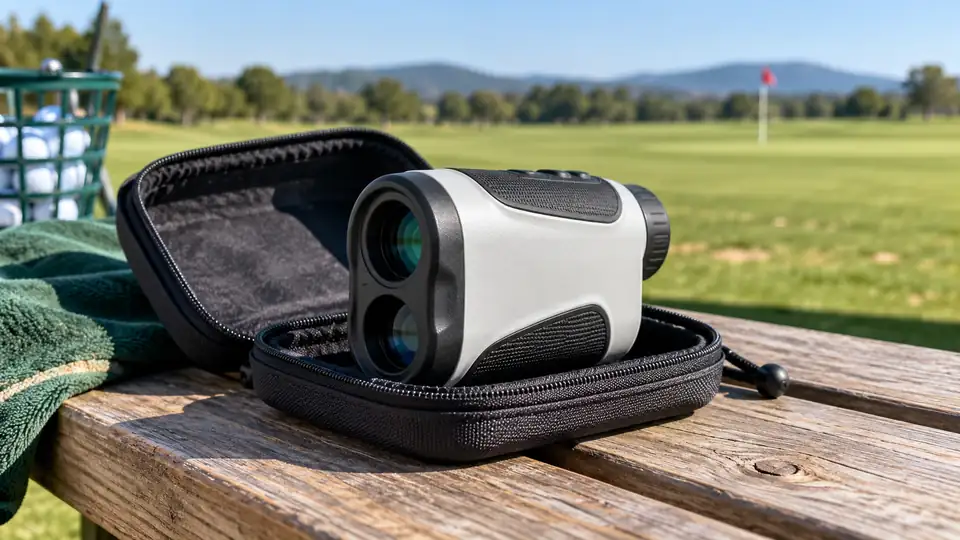
A golfer standing 150 yards from the green does not need another guess based on a sprinkler head, a course marker, or a quick look at the pin. A laser rangefinder can turn that uncertain walk-up into a clear club-selection decision, which explains why so many players search for the best golf rangefinder under $100. The challenge is finding a model that offers useful flag lock, readable optics, and dependable slope controls without paying for features that add confusion rather than value.
Budget rangefinders often look similar on a product page, yet the practical differences matter. Some have a physical slope switch for tournament rounds, while others make the setting harder to confirm. Magnification, target-lock vibration, display clarity, charging style, weather resistance, and magnet placement can all affect how smoothly the device fits into a round. A long advertised range also does not guarantee that a small flag will be easy to acquire, so the most useful comparison focuses on golf-oriented features rather than maximum numbers alone.
The nine models below cover several sensible priorities, including simple operation for beginners, stronger optical specifications, magnetic cart storage, rechargeable power, and slope functionality that can be disabled. Different golfers will value different details. A walking golfer may prefer a lighter body, while a tournament player may care most about a clearly marked slope-off switch. The comparison starts with a quick overview, then moves into the details that separate these affordable laser rangefinders.
Quick Answer
Best Overall: MOESAPU Golf Rangefinder with Slope combines a 1200-yard stated range, 7X magnification, flag-lock vibration, a magnetic mount, USB-C charging, and an external slope switch in a compact body.
Best Premium Option: Acer Pro Golf Rangefinder offers 7X magnification, anti-shake technology, six measurement modes, IP54 protection, and a stated capacity of up to 20,000 measurements per charge.
Best for Beginners: BirdiePulse Golf Rangefinder keeps the controls straightforward with straight-line and slope modes, while adding a magnetic mount and adjustable 6X to 6.5X magnification.
Best Simple Tournament Option: REVASRI Golf Rangefinder is compact and lightweight, with an external slope switch that leaves flag lock and vibration available when slope compensation is turned off.
Best Golf Rangefinder Under $100 Comparison Table
| Product | Best For | Range And Magnification | Useful Features |
|---|---|---|---|
| MOESAPU Golf Rangefinder | Best overall balance | 5 to 1200 yards, 7X | Slope switch, magnetic mount, IP54 |
| Acer Pro Golf Rangefinder | Feature-focused golfers | 5 to 1200 yards, 7X | Anti-shake, six modes, up to 20,000 measurements |
| BirdiePulse Golf Rangefinder | Beginners | 5 to 1300 yards, 6X to 6.5X | Simple modes, magnetic mount, HD LCD |
| REVASRI Golf Rangefinder | Lightweight tournament use | Up to 1000 yards | External slope switch, USB-C, 4.3 ounces |
| MOESAPU Gray Rangefinder | Focus adjustment and battery life | 5 to 1200 yards | Pin lock, diopter adjustment, speed mode |
| Mossy Oak Golf Rangefinder | Clear viewing and broad modes | Up to 1200 yards, 6X | HD LCD, six modes, magnetic stripe |
| Acer 800-Yard Rangefinder | Compact multi-use use | Up to 800 yards, 6X | Anti-shake, slope, scan, USB-C |
| Acer 1200-Yard Rangefinder | Outdoor versatility | Up to 1200 yards, 6X | Anti-shake, magnetic attachment, six modes |
| 1000-Yard Golf Rangefinder | Basic golf functions | Up to 1000 yards, 6X | Slope switch, flag lock, magnetic mount |
The reviews below look beyond the headline range and explain which golfers are most likely to appreciate each design.
1. MOESAPU Golf Rangefinder with Slope: Best Overall
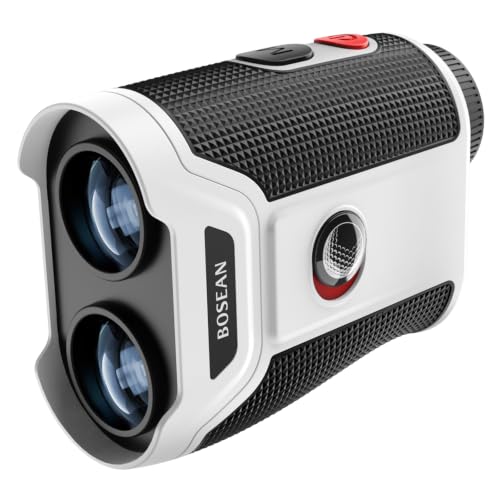
The MOESAPU rangefinder earns the top position because its feature set fits the needs of a typical recreational golfer without leaning too heavily into complicated controls. It provides a stated measurement range from 5 to 1200 yards, 7X magnification, flag-lock vibration, continuous scanning, and slope compensation. The physical slope switch is especially useful on a course where you want adjusted yardage during a practice round, then need a clearly identifiable way to disable that feature for competition.
Picture a cart golfer approaching a raised green with the device stored on the cart’s metal frame. The built-in magnet keeps it close at hand, while the transflective LCD is specified for visibility in sun or shade. At 6.4 ounces, it is light enough for a walking bag, though golfers who prefer the smallest possible pocket device may notice its broader shape. IP54 protection adds some resistance to dust and splashing, which is reassuring during morning dew or a brief shower, but it is not a license to leave the rangefinder exposed to heavy rain.
Pros
- Offers 7X magnification for viewing distant targets.
- Includes a physical slope switch for turning compensation off.
- Magnetic mount keeps the unit accessible on a golf cart or metal surface.
- USB-C charging and a stated capacity of up to 15,000 measurements reduce battery interruptions.
- IP54 protection and continuous scanning add useful course versatility.
Cons
- The 6.4-ounce body is less minimal than the lightest rangefinders in this roundup.
- The listing does not document a separate stabilization system beyond its ergonomic grip.
This is a strong match for golfers who want one device for casual play, practice, and occasional tournament rounds. The slope control, readable display, and magnet create a smooth routine: lift, aim, confirm the vibration, and put it away. A golfer who rarely uses slope or strongly prefers a very small unit may find simpler options more appealing, but the MOESAPU offers one of the most balanced combinations in this group.
To buy this product, click here.
2. Acer Pro Golf Rangefinder: Best Premium Option

The Acer Pro is aimed at golfers who want a more feature-rich rangefinder while remaining within a budget-oriented category. Its documented specifications include a 5 to 1200-yard range, 7X magnification, anti-shake technology, flag-lock vibration, and a transflective LCD display. Six measurement modes cover flag lock, slope compensation, horizontal and vertical distance, speed, and continuous scanning, so the device can serve a golfer who enjoys experimenting with different types of distance information.
The external slope switch is a practical detail rather than a flashy extra. With slope disabled, the listing states that the screen shows line-of-sight distance while flag lock and vibration remain active. That arrangement can be easier to verify than a menu setting buried inside the device. A built-in magnetic stripe supports cart storage, while the rechargeable battery is specified for up to 20,000 measurements per charge. IP54 protection gives it some defense against dust and splashes, and the included case, strap, cleaning cloth, and USB-C cable make the package ready for the course.
Pros
- Combines 7X magnification with stated anti-shake technology.
- Provides six measurement modes for golf and outdoor use.
- External slope switch makes the slope status easy to identify.
- Magnetic stripe, USB-C charging, and IP54 protection support regular course use.
- Includes a one-year repair service according to the product description.
Cons
- Its larger feature set may take longer to learn than a two-mode rangefinder.
- The stated 20,000-measurement capacity is a manufacturer specification rather than an independently verified result.
This model suits golfers who want more control over how distances are displayed, especially players who alternate between casual rounds and organized events. The extra modes can also appeal to hunters or archery users, although golfers who only need flag distance may never use them. It is a sensible premium-leaning choice for someone who values optical clarity, battery capacity, and a physical competition control more than the absolute lowest purchase cost.
To buy this product, click here.
3. BirdiePulse Golf Rangefinder: Best for Beginners
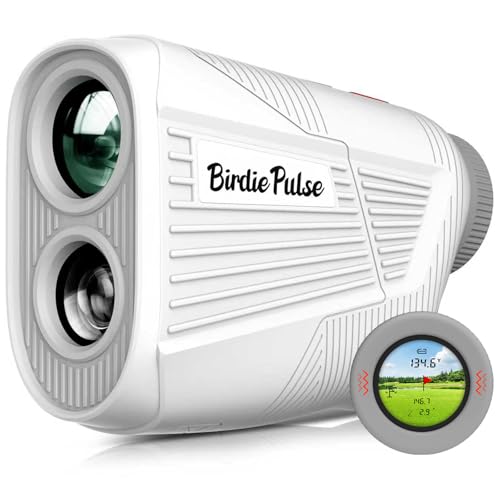
New rangefinder owners often do not need six layers of menus. They need to aim, press a button, see a number, and understand whether the device has locked onto the flag. The BirdiePulse takes that approach with straight-line and slope modes, flag-lock vibration, continuous scanning, and angle measurement. Its stated range reaches 1300 yards, while the optical system offers adjustable 6X to 6.5X magnification and an HD LCD.
The magnetic design is useful for a golfer who rides and wants the unit close to the steering console or cart frame. The streamlined shape is also described as palm-friendly, which may help reduce the awkward grip that can make aiming feel fussy for a first-time user. A player walking nine holes could keep it in a pocket or small rangefinder case, then use the M button to move between modes. The listing also includes a one-year warranty and customer support, details that may matter to a buyer who is still learning how these devices work.
Pros
- Uses a relatively simple two-mode operating layout.
- Provides adjustable 6X to 6.5X magnification and an HD LCD.
- Includes flag-lock vibration, continuous scanning, and angle measurement.
- Built-in magnet supports quick storage on a cart or metal club surface.
- USB-C charging and a stated one-year warranty add convenience.
Cons
- The listing gives less detail about water resistance than several competing models.
- Adjustable magnification may still require a short learning period for golfers unfamiliar with rangefinders.
Choose this model if you want broad reach and useful golf functions without an overly technical interface. It is especially appealing for a beginner who expects to use slope during practice but wants straight-line readings available for competition. Golfers who regularly play in wet conditions may prefer a model with a clearly documented IP rating, while those who value simple controls will find this design easier to approach.
To buy this product, click here.
4. REVASRI Golf Rangefinder: Best for Lightweight Tournament Use

At 4.3 ounces and approximately 3.8 by 2.6 by 1.3 inches, the REVASRI is one of the easier models to carry in a walking golfer’s pocket or small accessory pouch. Its stated range reaches 1000 yards, with flag lock, vibration, slope compensation, and a claimed measurement speed of 0.5 seconds. The multilayer-coated lens is intended to improve light transmission and reduce reflected light, a useful design goal when a bright fairway leaves the pin visually washed out.
The most important feature is the external angle switch. With slope enabled, the display provides line-of-sight distance, angle, and a compensated golf distance. With slope disabled, the listing states that the rangefinder continues to lock the flag and vibrate while showing straight-line distance. That gives a tournament-minded golfer a simple physical control instead of relying on memory or a hidden software setting. The two-button layout also keeps operation approachable for someone who wants a compact tool rather than a multi-purpose outdoor instrument.
Pros
- Lightweight 4.3-ounce body suits walking golfers.
- External switch allows slope compensation to be disabled.
- Provides flag lock and vibration in both slope-off use and regular operation.
- Multilayer-coated lens is intended to improve viewing clarity.
- Includes a pouch, carabiner, USB-C cable, lens cloth, and manual.
Cons
- Its stated 1000-yard maximum range is shorter than several 1200- and 1300-yard alternatives.
- The listing provides fewer details about weather resistance than models with an IP rating.
This is a good fit for golfers who walk, carry a compact bag, or want a straightforward rangefinder for league play. The lower weight may be more meaningful than a longer maximum range for someone measuring ordinary approach shots. A golfer who wants anti-shake technology, advanced scan modes, or stronger weather documentation should look elsewhere, but the REVASRI makes a persuasive case through portability and its clear slope-control design.
To buy this product, click here.
5. MOESAPU Gray Golf Rangefinder: Best for Focus Adjustment

This MOESAPU model brings a useful accessibility detail to the category: a focus system with a plus-or-minus 3-degree diopter adjustment. Golfers who wear glasses or have difficulty finding a crisp sight picture may appreciate being able to tune the view rather than accepting a fixed focus. The rangefinder is specified for distances from 5 to 1200 yards and includes pin-lock vibration, continuous scanning, a high-transmittance LCD, and speed mode.
The physical slope switch uses contrasting green and red markings to indicate whether compensation is on or off. That visual cue can be handy on a busy first tee, where a quick glance is preferable to cycling through settings. The claimed 800mAh battery capacity and 10,000-plus measurement specification suggest plenty of reserve for normal rounds, while automatic shutoff after eight seconds is intended to conserve power. The body is described as rainproof, but the product details does not provide a formal IP rating, so this is better viewed as a model for ordinary damp conditions than prolonged exposure.
Pros
- Includes diopter adjustment for a more individualized sight picture.
- Offers a 5 to 1200-yard stated measurement range.
- Uses color-marked slope controls that are easy to check.
- Provides pin-lock vibration, continuous scanning, and speed mode.
- Automatic shutoff is intended to conserve the rechargeable battery.
Cons
- The product description does not provide a formal IP water-resistance rating.
- Automatic shutoff after eight seconds may interrupt users who take longer to line up a target.
This rangefinder is worth a look for golfers who care about viewing comfort as much as raw range. Someone with glasses, changing eyesight, or a preference for a sharply adjusted display may find the diopter more valuable than another magnification level. Golfers who play frequently in heavy rain or want a magnetic cart mount will likely prefer another option, but the focus adjustment gives this model a distinct reason to appear.
To buy this product, click here.
6. Mossy Oak Golf Rangefinder: Best for Broad Measurement Modes

The Mossy Oak rangefinder is built around versatility. Its listed six measurement modes cover slope compensation, flag lock, horizontal and vertical distance, speed, continuous scanning, and straight-line distance. The stated 1200-yard range, adjustable 6X magnification, and high-definition LCD give it a familiar golf setup, while the additional modes make it suitable for players who use a rangefinder away from the course as well.
A two-button operation scheme keeps those functions from feeling completely buried, although a golfer who only wants the flag distance may still prefer a more focused device. The rechargeable 750mAh battery is specified for up to 20,000 measurements, and the magnetic stripe allows storage on a cart, bag, or belt. The package includes a pouch, cable, cleaning cloth, and manual, so there is no need to assemble a separate carrying setup before heading out for a round.
Pros
- Includes six distinct measurement modes.
- Provides adjustable 6X magnification and a high-definition LCD.
- Combines flag lock, slope compensation, and vibration confirmation.
- Magnetic stripe supports convenient storage during a round.
- USB-C charging and a stated capacity of up to 20,000 measurements support repeated use.
Cons
- The wide selection of modes may feel excessive for golfers who want one-button distance readings.
- The product details does not specify an external slope-disable switch.
Select this model if your rangefinder may serve as a general outdoor distance tool as well as a golf accessory. A golfer who enjoys scanning terrain or checking speed-related information will have more room to explore than with a basic unit. For tournament golfers, verify exactly how slope is disabled before relying on it for a sanctioned event, since the product description describes slope functionality but does not identify a physical external switch.
To buy this product, click here.
7. Acer 800-Yard Golf Rangefinder: Best for Compact Multi-Use

The Acer 800-yard model is a practical choice for someone who wants a golf rangefinder that can also support hunting, archery, or general outdoor distance work. It provides 6X magnification, flag-pole lock with vibration, slope compensation, vertical and horizontal distance, angle, speed, and scanning modes. Its stated maximum is lower than the longer-range products here, but 800 yards remains more than enough for ordinary golf targets and approach planning.
Anti-shake technology is included in the product specification, with the stated purpose of helping maintain a steadier view for users with less stable hands. The bright LCD is intended to keep readings visible, while the rechargeable USB-C battery avoids disposable cells. The magnetic stripe can keep the device near a cart or metal club surface, although golfers who walk may prefer carrying it in the included accessory setup. Its broad mode selection gives it appeal beyond golf, but the extra functions may be unnecessary for a player who wants the quickest possible pin reading.
Pros
- 6X magnification and a bright LCD support target viewing.
- Includes anti-shake technology according to the product specification.
- Offers slope, angle, speed, scan, and horizontal or vertical distance modes.
- Flag-lock vibration provides confirmation when the device identifies the pin.
- USB-C charging and a magnetic stripe add course convenience.
Cons
- The stated 800-yard range is shorter than the other Acer models in this roundup.
- The product description does not identify a formal slope-off control for tournament use.
This model makes sense for golfers who also enjoy outdoor activities and want one compact instrument for several tasks. It is less compelling for a tournament-focused player who needs an obvious slope-disable switch or for someone who wants the longest stated range available. As a golf-first device, it covers the essential distance, magnification, flag-lock, and slope functions without making maximum range the central selling point.
To buy this product, click here.
8. Acer 1200-Yard Golf Rangefinder: Best for Outdoor Versatility
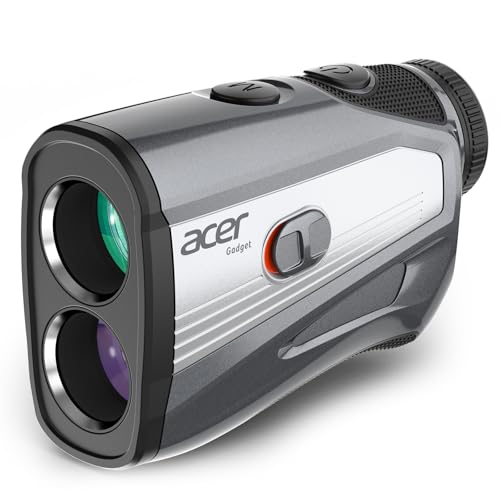
This Acer model steps up from the brand’s 800-yard version with a stated 1200-yard measurement range while keeping 6X optics, anti-shake technology, flag lock, vibration, and six measurement modes. The product information lists slope, angle, speed, horizontal and vertical distance, and scan functions, giving it enough flexibility for golf and other outdoor pursuits. Yard and meter switching is also included for golfers who prefer different measurement conventions.
The magnetic attachment is a useful touch during a cart round, and the included hand strap, case, cleaning cloth, and USB-C cable support a simple setup from the first outing. The listing states that the 750mAh battery can provide up to 20,000 measurements per charge. That number is a manufacturer claim, so actual use will depend on how often the device is activated and how long it remains on. The one-hand grip and anti-shake feature may appeal to players who find it difficult to keep a small optic steady while aiming at a distant flag.
Pros
- Offers a stated 1200-yard range with 6X HD optics.
- Includes anti-shake technology and flag-lock vibration.
- Six modes cover golf, hunting, archery, and general distance tasks.
- Magnetic attachment and a hand strap support different carrying styles.
- USB-C charging and a stated 20,000-measurement capacity reduce charging concerns.
Cons
- The listing does not identify a formal IP water-resistance rating.
- Its 6X magnification is lower than the 7X specification on some competing models.
Golfers who want a versatile rangefinder for the course and outdoor use should give this Acer serious attention. It offers more reach than the 800-yard model and keeps the controls broad enough for non-golf tasks. Players who prioritize documented splash protection or a tournament-specific slope switch may find the MOESAPU or Acer Pro more suitable, while casual golfers will likely appreciate this model’s combination of reach, portability, and magnetic storage.
To buy this product, click here.
9. 1000-Yard Golf Rangefinder: Best for Basic Golf Functions

This 1000-yard rangefinder focuses on the features most golfers use during a normal round: slope compensation, flag lock, vibration, 6X magnification, rechargeable power, and a magnetic mount. The slope setting can be turned off, and the product information describes that mode as suitable for tournament use. That gives a player a useful practice function for uphill and downhill shots, along with a straight-line option for rounds where slope information is not allowed.
The built-in magnet is convenient for riding golfers who do not want to dig through a bag before every approach. USB-C charging also keeps the device compatible with a common cable type, while the stated 1000-yard range is adequate for ordinary tee shots, hazards, and green approaches. The product listing provides less detail than some competitors about display construction, water resistance, or measurement modes, so its appeal rests on a clean core feature set rather than extensive specialization.
Pros
- Includes slope compensation with a switch for turning it off.
- Flag-lock technology and vibration confirm the selected target.
- 6X magnification supports viewing distant flags and course objects.
- USB-C charging avoids disposable battery replacement.
- Built-in magnet provides quick storage on a cart or metal club surface.
Cons
- The stated 1000-yard range is shorter than several alternatives in this selection.
- The product description gives fewer details about weather resistance and advanced measurement modes.
This rangefinder suits golfers who want a basic, familiar set of tools and do not need speed measurement, multiple scan modes, or specialized outdoor functions. A new player may appreciate the direct layout, while a more technical user could prefer one of the six-mode models above. Verify local event rules before competition, and make sure the slope indicator is disabled before recording a tournament distance.
To buy this product, click here.
Buying Guide
Choose Slope Based on How You Play
Slope compensation estimates a playing distance that accounts for uphill or downhill terrain, which can help during practice rounds on hilly courses. It should be treated as a practice aid rather than a universal tournament feature. If you play organized events, look for a physical slope-off switch or another clearly documented method that removes slope information while preserving ordinary distance measurement and, ideally, flag-lock vibration.
Look Beyond the Maximum Range
A rangefinder advertised for 1200 or 1300 yards may sound more capable, but golf usually involves locating a flag, bunker, tree, or hazard at much shorter distances. Target acquisition and flag-lock behavior are more relevant than the headline maximum. A model with a 1000-yard rating can still suit most courses, while higher magnification may make distant objects easier to frame.
Match Magnification and Display to Your Eyes
Magnification between 6X and 7X appears across this group. Higher magnification can help with distant targets, but a clear sight picture also depends on focus adjustment, display contrast, and lighting. The MOESAPU Gray model includes diopter adjustment, while several others specify HD or transflective displays. Golfers who wear glasses should check whether the eyepiece and focus controls are comfortable before committing.
Decide Whether a Magnet Helps
A magnetic stripe or built-in magnet is convenient for a riding golfer who wants the rangefinder attached to a cart. It can also reduce the number of times the device is placed on a seat or tucked into a cup holder. Walking golfers may care more about weight, case design, and a secure strap. A magnet should supplement safe storage rather than replace a case when the rangefinder is being carried inside a bag.
Check Charging and Weather Details
USB-C charging is convenient because the same cable may serve a phone, tablet, or other golf accessory. Battery-capacity claims are specifications, not guarantees of identical real-world use. Weather protection also varies. Models with IP54 documentation provide a clearer basis for handling dust and splashes, while products described only as rainproof should still be protected from prolonged heavy rain.
Think About the Controls You Will Actually Use
Six modes can be useful for golfers who enjoy measuring speed, scan distances, or vertical and horizontal readings. They can also slow down the learning process for someone who simply wants flag distance. Before buying, decide whether the rangefinder will stay on a golf cart, travel in a walking bag, or serve outdoor activities beyond golf. The right model is the one whose controls fit that routine, rather than the one with the longest specification list.
Best Golf Rangefinder Under $100 FAQ
Is a Rangefinder Under $100 Accurate Enough for Golf?
Many budget models in this selection list accuracy claims around plus or minus one yard, with some listings stating tighter figures. Those are manufacturer specifications rather than independent test results. For ordinary golf, a rangefinder that consistently locks onto the flag and displays a readable distance can be more useful than one with an impressive maximum range but awkward target acquisition.
Do I Need Slope Compensation?
Slope compensation can help during practice by showing an adjusted distance for uphill and downhill shots. It is less useful if you play mostly flat courses or prefer to make your own elevation judgments. Golfers who enter events should select a model with a clearly documented slope-off function and confirm the rules for the specific competition.
Are These Rangefinders Tournament Legal?
A rangefinder can be used in competition only when its slope and other prohibited functions are disabled, and local rules still apply. Several products here describe a slope-off mode, but the exact control differs by model. Check that the display no longer shows slope or compensated distance before using the device in a tournament.
Is a 1200-yard Range Necessary for a Golf Course?
Usually, no. Most golfers measure targets far closer than 1200 yards. A longer stated range may provide extra flexibility for hunting or general outdoor use, but flag-lock behavior, optical clarity, and ease of aiming matter more for normal approaches. A 1000-yard model can be enough for many players.
Should I Choose 6X or 7X Magnification?
Six-times magnification is suitable for many golf targets and may feel easier to hold steady. Seven-times magnification can make a distant pin appear larger, but it may also make hand movement more noticeable. The choice depends on your eyesight, steadiness, and preference for a wider or closer view.
Are Rechargeable Rangefinders Better Than Models with Replaceable Batteries?
Rechargeable units eliminate the need to keep spare disposable batteries in a golf bag and usually charge through USB-C. They do require advance charging, so check the battery indicator before leaving for the course. If you often forget to charge devices, a replaceable-battery design may be more convenient, though every model in this selection uses rechargeable power.
What Does Flag-lock Vibration Do?
Flag-lock vibration is an audible or physical confirmation that the rangefinder believes it has identified the flag or flagstick. It can reduce uncertainty when the pin sits against trees or other background objects. It does not guarantee that every reading is correct, so keep the device steady and confirm that the target marker is aimed at the intended object.
Final Verdict
The MOESAPU Golf Rangefinder with Slope is the strongest overall match for this roundup because it combines a 1200-yard stated range, 7X magnification, flag-lock vibration, a magnetic mount, USB-C charging, continuous scanning, and a clearly described slope switch. It covers the everyday needs of a casual golfer while retaining features that matter to someone who practices on hilly courses or occasionally plays under tournament-style rules. The Acer Pro is a stronger alternative for golfers who want six modes, anti-shake technology, IP54 protection, and a larger stated battery capacity.
Golfers who prefer simple controls should look at the BirdiePulse, while the lightweight REVASRI is a sensible choice for walking and straightforward slope control. Before buying, prioritize the routine you will follow on the course. Check how slope is disabled, decide whether a magnet or lighter body matters more, and select magnification that matches your eyesight and steadiness. A budget rangefinder earns its place in a golf bag when it gives clear, repeatable distance information without slowing down the round.
