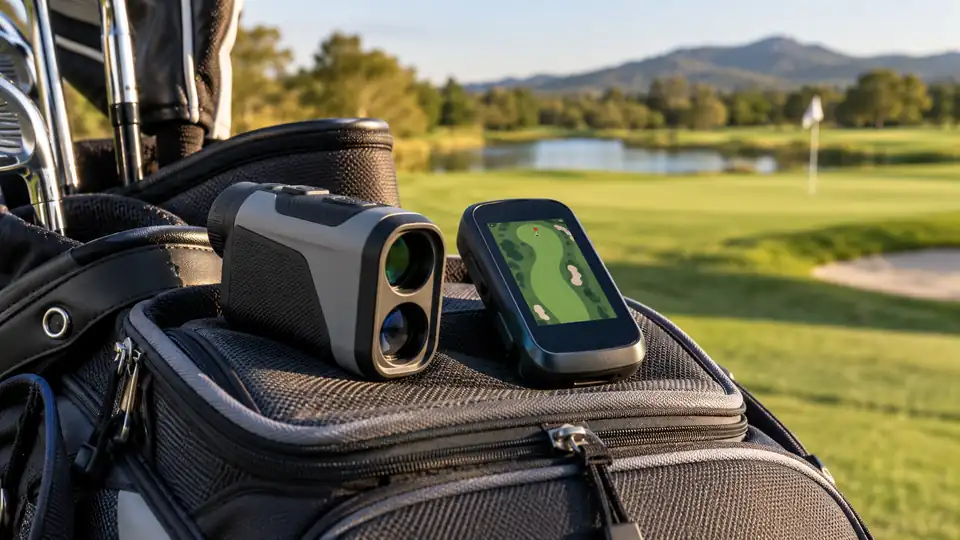
A golf round can change quickly when the number on your sprinkler head does not match the shot in front of you. A laser rangefinder helps replace guesswork with a clear target distance, whether you are choosing between a 7-iron and an 8-iron or trying to carry a bunker that seems to sit miles away. Golfers usually search for the best golf rangefinder because they want faster decisions, more confidence over uneven lies, and a practical alternative to pacing off yardages.
The most common mistake is choosing by maximum range alone. A device advertised for 1,300 or 1,500 yards may still be used mainly within a few hundred yards of the flag, where target acquisition, display clarity, vibration feedback, and slope controls matter more. Battery type, cart mounting, weather protection, size, and whether the device is a laser or GPS unit also shape the experience. Slope-adjusted distance can be useful on hilly courses, but it must be switched off for rounds where tournament rules require a non-compensated reading.
This comparison focuses on genuine rangefinders with documented golf features, from compact rechargeable models to advanced units that connect with launch-monitor data or combine laser and GPS yardages. Different golfers will favor different tools. A walker may want a pocket-size body, while a rider may appreciate a strong magnetic mount. Some players need a simple pin distance, and others want wind, elevation, and course information in one device.
Quick Answer
Best overall: Bushnell Golf Tour V6 Shift offers a strong blend of slope compensation, target confirmation, optical reach, and cart convenience.
Best advanced option: Bushnell Golf Pro X3+ Link adds wind and elements compensation for golfers who want more detailed shot planning.
Best value-oriented choice: Callaway Golf 300 Pro Slope provides the core laser rangefinder features many golfers need without the complexity of a connected system.
Best compact choice: Bushnell Golf A1-Slope keeps slope, JOLT confirmation, and USB-C charging in a pocket-friendly format.
Best Golf Rangefinder Comparison Table
| Product | Best For | Key Features | Power and Range |
|---|---|---|---|
| Bushnell Tour V6 Shift | Overall balance | Slope, Visual JOLT, magnetic mount | 1300 yards, 6x, CR2 battery |
| Callaway Golf 300 Pro Slope | Simple course use | Slope switch, pin lock, cart mount | 1000 yards, 6x, battery powered |
| Acer Golf Rangefinder | Multi-purpose outdoor use | Six modes, slope, scan, vibration | 800 yards, 6x, USB-C rechargeable |
| Bushnell Tour V7 Shift | Display clarity and data recall | Dual-color display, slope, LINK support | 1300 yards, 6x, CR2 battery |
| REDTIGER GolfVue Series 1 | Feature variety | Seven modes, slope switch, magnetic strip | 1200 yards, 7x, USB-C rechargeable |
| Bushnell Pro X3+ Link | Advanced shot planning | Wind, elements, LINK, dual display | 1300 yards, 7x, CR2 battery |
| Bushnell A1-Slope | Walking and portability | Compact body, slope, JOLT | 1300 total yards, 6x, USB-C rechargeable |
| Bushnell Tour Hybrid | Laser and GPS information | Laser, GPS, hazards, front/center/back | 1300 total yards, rechargeable GPS system |
| Blue Tees Series 3 Max+ | Readable display and charging | Auto-ambient display, slope, pulse vibration | 1000 yards, 6x, rechargeable |
The detailed reviews below look at how each model fits into an actual round, from quick pin measurements to more involved elevation and course-planning needs.
1. Bushnell Golf Tour V6 Shift Laser Rangefinder: Best Overall

The Tour V6 Shift hits the sweet spot for golfers who want useful technology without turning a yardage check into a small electronics project. Its slope function measures uphill and downhill changes, then presents a slope-adjusted distance to help with club selection. A physical switch lets golfers disable that function for rounds where slope compensation is not permitted, which is a much more practical arrangement than having to remember a complicated menu setting.
Target confirmation is handled through Bushnell’s PinSeeker and Visual JOLT features. The vibration gives tactile feedback, while the red visual ring provides a second cue when the unit identifies the flag. That combination can be handy on a busy green with trees, bunkers, or background objects competing for the laser’s attention. The 6x magnification, 1300-yard total range, and BITE magnetic mount round out a package that suits riders who want quick access from the cart.
Pros
- Slope compensation helps account for uphill and downhill shots.
- External slope switch supports use in rounds requiring slope to be disabled.
- PinSeeker vibration and Visual JOLT confirm flag acquisition.
- BITE magnetic mount keeps the unit accessible on a compatible cart surface.
- Includes a case, CR2 battery, microfiber cloth, and quick-start guide.
Cons
- Uses a replaceable CR2 battery rather than USB-C charging.
- Offers fewer connected features than the Pro X3+ Link or Tour Hybrid.
This is the easiest recommendation for a golfer who wants a premium laser rangefinder that stays focused on the essentials. It should suit players who ride regularly, play courses with elevation changes, and appreciate clear confirmation when the flag is locked. Walkers may prefer a smaller rechargeable model, while golfers seeking wind data or GPS front, center, and back numbers will need a more advanced device.
To buy this product, click here.
2. Callaway Golf 300 Pro Slope Laser Rangefinder: Best for Straightforward Golf Use

Some golfers want a rangefinder that feels familiar within the first few minutes. The Callaway Golf 300 Pro Slope takes that approach, pairing 6x magnification with a stated measurement range from 5 to 1,000 yards. It measures in yards or meters, so it can work for players who switch between units during practice or travel. The layout is aimed at the basic rhythm of golf: aim, lock onto the target, read the number, and choose a club.
Callaway’s Pin Acquisition Technology helps locate the pin, while a short pulse confirms the lock. The external slope switch is useful for golfers who practice with elevation information but need to disable slope for certain competitive rounds. Its Magnahold cart mount also keeps it close at hand during a riding round. This is a sensible option for a golfer who does not need an app, GPS mapping, or environmental calculations cluttering the process.
Pros
- 6x magnification supports clear viewing of distant targets.
- Slope measurement accounts for elevation changes.
- External slope switch allows slope to be turned off when required.
- Pin Acquisition Technology and pulse feedback confirm target lock.
- Includes a molded hard case with a carabiner and quick-close band.
Cons
- Its stated flag-locking distance is shorter than its maximum overall range.
- It lacks USB-C charging and advanced connected shot-planning features.
The Callaway is a good match for a recreational golfer who wants the core benefits of a laser rangefinder without paying for a broader information system. It makes sense for a first rangefinder, a backup device, or a player who prefers a simple cart-mounted tool. Golfers who want rechargeable power, stronger weather protection, or extra information beyond the pin distance should look farther down this list.
To buy this product, click here.
3. Acer Golf Rangefinder With Slope: Best for Multi-Purpose Outdoor Use

The Acer rangefinder stands apart by offering several measurement modes beyond a standard golf pin reading. Its documented functions include slope compensation, vertical and horizontal distance, angle, speed, and scanning. That wider toolkit may appeal to someone who plays golf but also spends time hunting, practicing archery, or measuring outdoor targets. For a golfer, the useful pieces are the slope mode, flagpole lock, 6x magnification, and bright LCD display.
The unit has an 800-yard stated range and uses a rechargeable battery with USB-C charging. Its anti-shake feature is intended to help maintain steadier readings, though it should not be treated as a substitute for holding the device carefully. The vibration alert provides another sign that a flagpole has been identified. This model is especially interesting for players who dislike carrying a dedicated device that serves one purpose, although its extra modes may feel unnecessary during a quick Saturday round.
Pros
- Offers six measurement modes for golf and other outdoor activities.
- Includes slope compensation for elevation-aware yardages.
- USB-C rechargeable battery avoids routine CR2 replacement.
- Flagpole lock and vibration feedback support target confirmation.
- 6x magnification and a bright LCD display aid target viewing.
Cons
- Its 800-yard stated range is shorter than several premium alternatives here.
- The additional hunting and archery modes may add complexity for golf-only users.
This Acer is a practical pick for a golfer who wants one compact outdoor measuring tool rather than a golf-only laser. It may also suit someone buying a first rangefinder who values USB-C charging and multiple functions. A player seeking the most polished golf-specific interface, an integrated cart magnet, or stronger documented weather protection should choose a different model.
To buy this product, click here.
4. Bushnell Golf Tour V7 Shift Laser Rangefinder: Best for Display Clarity and Yardage Recall

The Tour V7 Shift builds on a familiar premium laser format but gives the display a more prominent role. Its dual-color OLED separates the slope-adjusted “plays-like” distance from the actual distance, using different colors to make the two readings easier to distinguish at a glance. That can help during a hilly approach where a golfer is standing beside the cart, looking down at the display, and trying to make a club decision without mixing up the compensated and raw numbers.
Yardage Range Recall adds a useful practice and course-management feature. A golfer can review the last measured distance with a single press, which may help when checking a previous target or thinking through a hole after stepping away from the ball. The unit also supports LINK connections with compatible Bushnell and Foresight launch monitors for personalized club suggestions, although those connected tools are separate considerations. PinSeeker and Visual JOLT keep the basic flag-finding process familiar.
Pros
- Dual-color OLED separates actual and slope-adjusted yardages.
- Yardage Range Recall helps review a recent measurement.
- Slope technology supports elevation-aware club decisions.
- PinSeeker and Visual JOLT provide visual and tactile target confirmation.
- LINK compatibility can connect with supported launch-monitor data.
Cons
- Advanced connected functions are less useful without compatible launch-monitor equipment.
- Uses a CR2 battery instead of a built-in rechargeable battery.
The Tour V7 Shift is aimed at the golfer who cares about reading information quickly and keeping course decisions organized. It is a strong fit for practice-minded players who already use compatible launch-monitor equipment, though its display remains useful without that ecosystem. Someone who wants a simpler laser or a smaller walking-friendly device may find the added display features unnecessary.
To buy this product, click here.
5. REDTIGER GolfVue Series 1 Rangefinder: Best for Feature Variety

The REDTIGER GolfVue Series 1 packs a broad set of golf measurements into a rechargeable laser format. It lists a 5-to-1,200-yard measurement range, 7x magnification, slope compensation, flag locking, horizontal and height ranging, speed measurement, and continuous scanning. That menu gives an experienced golfer room to explore different ways of reading a hole, while a new user can stay with the basic flag and slope functions until the controls become familiar.
A transflective LCD is intended to keep the reading visible across changing outdoor light, and the magnetic strip can attach to a cart or other metal surface. The included belt clip gives walkers another carrying option. IP54 water resistance offers some protection for ordinary damp conditions, but it does not make the device a substitute for a fully waterproof rangefinder in heavy rain. USB-C charging is convenient for golfers who already carry a cable for other devices.
Pros
- Provides a 1,200-yard stated measurement range.
- 7x magnification offers a strong view of distant targets.
- Includes slope, scan, speed, height, and horizontal measurement modes.
- USB-C charging is convenient for regular golf use.
- Magnetic strip and belt clip support cart or walking carry.
Cons
- IP54 water resistance is more limited than the IPX7 rating listed for the Pro X3+ Link.
- The many modes may require more setup and button familiarity than a simpler laser.
This model fits a golfer who wants feature breadth, rechargeable power, and flexible carrying options. It can be appealing for practice sessions where scanning and height measurements have a role, while the slope switch keeps the main golf function adaptable. Players who prefer a minimalist interface or want a stronger documented water-resistance rating may be happier with a more focused premium model.
To buy this product, click here.
6. Bushnell Golf Pro X3+ Link Laser Rangefinder: Best for Advanced Shot Planning

The Pro X3+ Link is the most information-heavy laser in this group. Along with slope compensation, it adds temperature and altitude elements compensation, plus home-elevation adjustment. When connected to the mobile app, it can show wind speed and direction. These tools are aimed at golfers who enjoy treating each approach as a collection of variables rather than relying on a single pin number, especially on courses where elevation and changing conditions affect club selection.
Its 7x magnification, PinSeeker with Visual JOLT, BITE magnetic mount, and rubber-armored metal housing support the day-to-day golf experience. The listed IPX7 waterproof rating is also useful for golfers who play through unpredictable weather. LINK compatibility can connect the rangefinder with supported Bushnell or Foresight launch-monitor data, but that ecosystem adds requirements and may be more technology than a casual player needs.
Pros
- Combines slope with temperature and altitude elements compensation.
- Connected use can provide wind speed and direction information.
- 7x magnification supports long-distance target viewing.
- IPX7 waterproof rating and rubber-armored metal housing suit demanding conditions.
- LINK support can use compatible launch-monitor data for personalized guidance.
Cons
- Wind and connected features require a compatible mobile app or launch-monitor setup.
- Its advanced controls may be excessive for golfers who only need basic pin yardage.
The Pro X3+ Link makes the most sense for a committed golfer who enjoys detailed course management and already has compatible connected equipment. It is also a logical choice for wet-weather play because of its documented water-resistance rating. A golfer who wants a quick grab-and-read device with minimal configuration should choose the Tour V6 Shift or Callaway instead.
To buy this product, click here.
7. Bushnell Golf A1-Slope Laser Rangefinder: Best for Walking Golfers
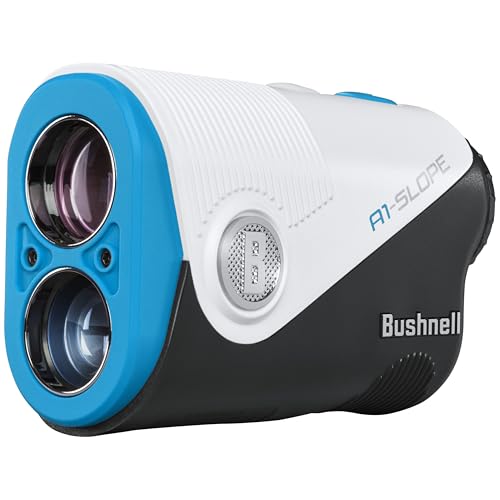
The A1-Slope takes a different path from the larger cart-oriented rangefinders. Its ultra-compact body is intended to slip into a pocket or small accessory compartment, which matters on a walking round where every extra item competes for space. It still includes 6x magnification, slope technology, PinSeeker with JOLT, and a switchable slope function, so portability does not require giving up the core distance tools.
The device is listed with a total range of up to 1,300 yards and accuracy within 1 to 350 yards to a flag. That distinction is useful because maximum target range and practical flag acquisition are separate things. The rechargeable battery is stated to last 50 or more rounds, and USB-C charging makes topping it up familiar for many golfers. The included BITE magnetic skin provides cart attachment, although the unit’s strongest appeal remains its small footprint.
Pros
- Ultra-compact design suits walking golfers and small golf bags.
- Slope mode can be switched off for applicable competitive rounds.
- PinSeeker with JOLT confirms a flag lock.
- USB-C charging avoids carrying replacement batteries.
- Includes a magnetic skin, case, charging cable, and cleaning cloth.
Cons
- The compact format may be less comfortable for golfers who prefer a larger grip.
- Its documented flag range is more limited than the total advertised range.
The A1-Slope is a smart match for walkers, juniors, and golfers who dislike a bulky device hanging from a cart. It also works for anyone who wants Bushnell’s familiar slope and JOLT features in a rechargeable body. Cart-focused players who prefer a larger display or who want wind and elements compensation should step up to a different model.
To buy this product, click here.
8. Bushnell Golf Tour Hybrid Laser Rangefinder: Best for Laser and GPS Information

The Tour Hybrid is for golfers who do not want to choose between a precise laser target and broader GPS course information. Its display combines laser distance to the pin with GPS-powered front, center, and back yardages. That can be helpful on a par five where the golfer wants the exact flag distance but also needs a quick look at green depth or the shape of the hole before committing to a shot.
The device also lists hazard information, hole views, slope compensation, and more than 38,000 preloaded courses without a membership fee. Automatic course recognition is intended to reduce setup friction, while the BITE mount keeps the hybrid unit available on a cart. Laser accuracy is listed within 1 yard out to 500 yards to a flag, with a total range of up to 1,300 yards. GPS features depend on course data and satellite connection, so this is a broader tool rather than a pure replacement for a compact laser.
Pros
- Combines laser pin distances with GPS front, center, and back readings.
- Provides hazard, layup, hole-view, and course-position information.
- Includes more than 38,000 preloaded courses without a membership fee.
- Slope-Switch controls both laser and GPS slope-adjusted distances.
- Includes an integrated BITE magnetic cart mount and a two-year warranty.
Cons
- Its larger feature set may be unnecessary for golfers who want a basic laser reading.
- GPS functions depend on course recognition and satellite connectivity.
This is the strongest choice for a rider who wants course context alongside a direct flag measurement. It can reduce the need to carry a separate GPS device, especially for golfers who routinely check hazards and green positions before selecting a club. Walkers seeking the smallest possible rangefinder or golfers who avoid screens and extra information should choose a simpler laser.
To buy this product, click here.
9. Blue Tees Golf Series 3 Max+: Best for Display Adaptability

The Series 3 Max+ is built around a readable display and a rechargeable power system. Its Auto-Ambient technology changes the display text between red and black to suit lighting conditions, which can be useful when a bright fairway suddenly gives way to a shaded tree line. The 6x magnification, flag-locking vibration, and stated 1,000-yard range cover the ordinary needs of most golf rounds.
Adaptive slope measures incline and decline, and the slope switch allows the feature to be disabled for applicable tournament play. A built-in magnetic strip attaches to a cart, club, or other metal surface, while the water-resistant casing and included weather-proof case add practical protection. The package also includes a lanyard, charging cable, cleaning cloth, and mountaineer buckle. The result is a well-equipped laser for golfers who want modern conveniences without stepping into GPS or launch-monitor connectivity.
Pros
- Auto-Ambient display adjusts text color for changing light.
- Adaptive slope can be switched off for applicable competition use.
- Flag Lock pulse vibration helps confirm the intended target.
- USB-C rechargeable battery reduces dependence on disposable cells.
- Includes a magnetic strip, case, lanyard, cable, and two-year warranty.
Cons
- Its 1,000-yard range is shorter than the maximum ranges of several Bushnell models here.
- It does not provide GPS course mapping or advanced environmental compensation.
The Series 3 Max+ suits golfers who spend time moving between bright and shaded holes and want a display that adapts without manual adjustment. It is also a sensible fit for players who prefer rechargeable equipment and a familiar pin-locking workflow. Golfers who need course maps, wind information, or the smallest possible body will find more suitable alternatives among the hybrid, Pro X3+, and A1-Slope models.
To buy this product, click here.
Buying Guide
Laser Range and Practical Flag Acquisition
A listed maximum range describes the device’s overall measurement capability, not necessarily the distance at which it will lock onto a flag. Look for the separate flag-acquisition information when it is supplied. For most golfers, reliable readings on normal approach shots matter more than a very large headline number, especially on a green with trees or other background objects.
Slope Controls
Slope compensation can help translate an uphill or downhill shot into a more useful playing distance. A slope switch is equally important because many competition formats require the function to be disabled. Check that the control is easy to identify before a round, and avoid assuming that every rangefinder with slope is automatically legal in every setting.
Target Confirmation
Vibration alerts, visual rings, and pin-locking systems help confirm that the laser has found the flag rather than a tree or background object. These cues are especially useful for golfers with unsteady hands or for shots where the flag sits against a busy backdrop. They do not remove the need to aim carefully, but they can make the reading easier to trust.
Battery and Charging
CR2-powered models are convenient if you keep a spare battery in the case. USB-C models reduce battery shopping and may fit more naturally into a golfer’s existing charging routine. A rechargeable device still needs to be charged before a round, so check the stated battery expectations and think about whether you walk, ride, or play several rounds between charging opportunities.
Mounting and Portability
A magnetic cart mount is useful for riders who want one-handed access between shots. Walkers may prefer a compact body, belt clip, lanyard, or case that fits into a pocket. A strong mount does not matter much if you carry the device for 18 holes, while a tiny rangefinder may feel less comfortable for someone who keeps it on the cart and prefers a larger grip.
Laser, GPS, or Both
A laser gives a direct distance to a selected target. GPS can add front, center, and back distances, hazards, layups, and hole views without requiring the golfer to aim at the flag. Hybrid models provide both approaches, but they also bring more information and more dependence on course recognition or satellite connectivity. Choose the format that matches how you make decisions on the course.
Best Golf Rangefinder FAQ
Do Golf Rangefinders with Slope Work for Tournament Play?
A rangefinder with slope may be usable in a round where distance-measuring devices are permitted if its slope function is disabled. The exact rules and event conditions still matter, so check the competition requirements before play. Models in this guide with slope switches include the Bushnell Tour V6 Shift, Callaway Golf 300 Pro Slope, A1-Slope, Tour Hybrid, and Blue Tees Series 3 Max+.
Is a 1,300-yard Range Necessary for Golf?
Most golfers do not need to measure a flag anywhere near the device’s maximum overall range. A longer advertised range can be useful for distant targets, but flag-locking capability, magnification, and target confirmation are more relevant during ordinary approach shots. The Callaway’s stated 1,000-yard range can be sufficient for many golfers, while the Bushnell models offer more reach for players who want it.
Are Rechargeable Golf Rangefinders Better Than Battery-powered Models?
Neither power system is automatically better. USB-C charging is convenient and avoids carrying CR2 replacements, while a replaceable battery can be swapped quickly beside the first tee. Rechargeable models such as the Acer, REDTIGER, A1-Slope, and Blue Tees require advance charging, so your preferred routine should guide the choice.
What Magnification Should a Golf Rangefinder Have?
Six times magnification is common among the models in this guide and provides a useful view of flags and distant targets. Seven times magnification, found on the REDTIGER and Pro X3+ Link, can make distant targets appear larger, but optical clarity and stable aiming still matter. Magnification alone does not guarantee an easier flag lock.
Should a Beginner Use a Slope Rangefinder?
A beginner can benefit from slope information while learning how elevation changes affect club selection, particularly on a hilly course. It is wise to compare the compensated number with the actual distance and learn how the feature influences decisions rather than treating it as an automatic club recommendation. The slope function should be disabled when the applicable rules require a raw distance.
What Is the Difference Between a Laser Rangefinder and a GPS Golf Device?
A laser rangefinder measures the distance to the target you aim at, such as a flag or bunker edge. A GPS device uses course information to show broader details such as front, center, and back green distances, hazards, or layups. The Bushnell Tour Hybrid combines both methods, while the other laser models here focus primarily on aiming at and measuring selected targets.
Do All Golf Rangefinders Attach to a Cart?
No. Many models include a magnetic mount or magnetic strip, but the mounting design and included accessory vary. The Tour V6 Shift and Pro X3+ Link use BITE-style cart mounting, while the A1-Slope includes a BITE magnetic skin. A golfer who walks should prioritize the case, body size, and carrying options instead of assuming a cart mount will be useful.
Final Verdict
The Bushnell Golf Tour V6 Shift is the best overall choice for most golfers in this group because it balances the features that matter during a normal round. Slope compensation, a physical slope switch, Visual JOLT, 6x magnification, and a magnetic cart mount create a straightforward workflow from target selection to club choice. It avoids the extra complexity of GPS and connected systems while still offering the premium details many golfers expect from a serious rangefinder.
Golfers who want deeper environmental information should look at the Bushnell Pro X3+ Link, while the Tour Hybrid is the better fit for players who want laser and GPS data in one device. The Callaway Golf 300 Pro Slope keeps the process simpler, the A1-Slope is easier to carry on foot, and the Blue Tees Series 3 Max+ brings adaptable display behavior and USB-C charging. Match the choice to your normal round, your preferred carrying style, and whether you need a precise pin reading or a broader view of the hole.
