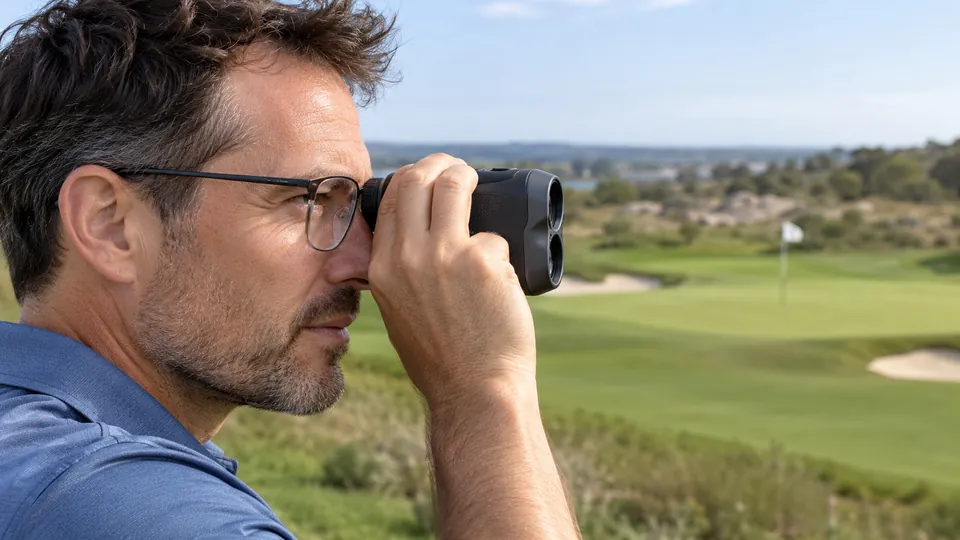
A golfer who wears glasses often discovers the rangefinder problem on the first tree-lined fairway. The view through the eyepiece feels cramped, the edge of the frame gets in the way, or the yardage looks soft until the device is pressed awkwardly against the lens. A good rangefinder should make that moment quicker, not turn a simple approach shot into a small wrestling match.
Eyeglass-friendly use depends on more than magnification. Adjustable focus, a forgiving viewing window, readable display contrast, vibration confirmation, and a simple way to steady the unit all matter. Buyers also make the mistake of chasing the longest advertised range while overlooking eye relief and controls. Someone who rides in a cart may prefer a strong magnetic mount, while a golfer who walks may care more about weight, battery charging, and one-handed operation.
The nine selections below include laser rangefinders with slope, GPS alternatives with larger screens, and models with features that can make viewing easier through prescription lenses. Some prioritize optical targeting, while others reduce the need to look through a small eyepiece at all. The Blue Tees Captain Pro earns the strongest overall position for its combination of laser targeting, GPS information, adjustable OLED visibility, and eyeglass-friendly convenience.
Quick Answer
- Blue Tees Golf Captain Pro: Best overall for golfers who want laser targeting, GPS distances, and a bright adjustable display.
- MOESAPU 1200-Yard Rangefinder: Best for eyeglass wearers who want a documented diopter adjustment for myopia or presbyopia.
- Bushnell Phantom 3 Slope GPS: Best screen-first option for golfers who would rather read large front, center, and back yardages than look through a laser eyepiece.
- Bushnell Tour V6 Shift: Best premium laser choice for long-range targeting, slope control, and quick pin confirmation.
Best Golf Rangefinder for People with Glasses Comparison Table
| Product | Best For | Viewing Advantage | Key Features |
|---|---|---|---|
| Blue Tees Golf Captain Pro | Best Overall | Adjustable OLED display plus GPS | 7x, 1,200-yard range, slope, IP67 |
| MOESAPU 1200-Yard Rangefinder | Adjustable focus | Diopter adjustment for myopia and presbyopia | 7x, rechargeable, pin vibration |
| Bushnell Tour V6 Shift | Premium laser use | 6x optics, visual and vibration feedback | 1,300-yard range, slope switch, waterproof |
| REDTIGER GolfVue Series 1 | Flexible everyday use | Transflective LCD and 7x magnification | 1,200-yard range, USB-C, IP54 |
| Callaway Golf 300 Pro | Simple established design | 6x optics with pulse confirmation | 1,000-yard range, slope switch, magnet |
| Acer Golf Rangefinder | Budget laser versatility | Bright LCD and anti-shake feature | 800-yard range, 6x, USB-C |
| F-1000S Golf Rangefinder | Lightweight carry | 7x high-clear-transmission lens | 1,200-yard range, 0.27 lb, IP54 |
| Bushnell Phantom 3 Slope GPS | Large screen viewing | Handheld touchscreen | 38,000+ courses, slope, 14+ hours |
| Izzo Swami 7000i | Simple GPS navigation | 2.5-inch color touchscreen | 38,000+ courses, USB-C, up to 16 hours |
The detailed reviews below explain how each model handles glasses, visibility, targeting, charging, and everyday course use.
1. Blue Tees Golf Captain Pro Golf Rangefinder: Best Overall
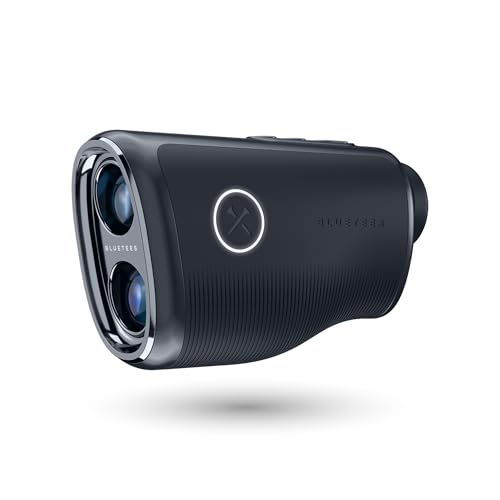
The Captain Pro is the most complete fit for a golfer who wears glasses and wants one device to handle several kinds of yardage information. Its laser provides direct targeting, while the GPS side can show front, center, and back distances without requiring the golfer to line up a small eyepiece every time. That dual approach is handy on a bright afternoon when the flag is easy to see, and equally useful when a pin is tucked behind a rise and a quick green overview is more practical.
The adjustable-brightness OLED display is another meaningful advantage for prescription-lens users. A screen that can be tuned for sunlight or lower light gives the wearer more control than a fixed display, although the product description does not document a dedicated eyeglass eye-relief specification. The 7x magnification, flag-lock vibration, magnetic mount, USB-C charging, and IP67 rating round out a feature set aimed at frequent golfers. Club suggestions, shot tracking, and app-based course information add depth, but they may feel like extra dashboard clutter for someone who wants only a quick number.
Pros
- Combines laser measurements with GPS front, center, and back distances.
- Adjustable OLED brightness can help adapt the display to changing light.
- 7x magnification and flag-lock vibration support precise target confirmation.
- USB-C charging and an IP67 rating suit regular outdoor use.
- Magnetic mounting, shot tracking, and find-my-device support add practical convenience.
Cons
- The connected app and club recommendation features may be more complexity than some golfers need.
- The specifications do not state a dedicated eyeglass eye-relief measurement.
This is the strongest pick for a glasses-wearing golfer who wants flexibility rather than a single viewing method. A player who usually rides can leave it on the cart magnet, glance at GPS information, and use the laser only for a precise flag reading. Golfers seeking the simplest possible rangefinder may prefer the Callaway or Acer, while those who struggle with eyepieces altogether should look closely at the Phantom 3 or Izzo touchscreen units.
To buy this product, click here.
2. MOESAPU 1200-Yard Golf Rangefinder: Best for Adjustable Focus

Many rangefinders mention magnification, but this MOESAPU model addresses the more personal part of the viewing equation: focus. Its specifications describe a plus-or-minus 3-degree diopter adjustment and specifically mention use for myopia and presbyopia. That does not guarantee a perfect view for every prescription, yet it gives eyeglass wearers a useful control that fixed-focus models may lack. A golfer can set the image for the target instead of repeatedly shifting the device or squinting through the lens.
The unit also combines 7x magnification, pin-lock vibration, continuous scanning, and a rechargeable 800mAh battery. The physical slope switch uses visible color markings, which helps a player check whether slope compensation is active before a competitive round. Its high-transmittance LCD should be readable in suitable light, though an LCD is not the same as the adjustable OLED used by the Blue Tees. A golfer standing over a downhill approach may appreciate the slope information, while someone playing a quick nine holes may value the automatic shutoff and straightforward controls more.
Pros
- Documented diopter adjustment supports myopia and presbyopia users.
- 7x magnification pairs with pin-lock vibration and continuous scanning.
- Physical slope switch makes the slope status easy to check.
- Rechargeable battery avoids routine disposable battery replacement.
- Automatic shutoff helps conserve power between shots.
Cons
- Its LCD does not offer the adjustable brightness details listed for the Blue Tees OLED.
- The feature set is more focused on laser measurement than GPS course information.
This is a particularly sensible choice for golfers whose prescription makes focusing through a rangefinder frustrating. The diopter is the central reason to select it, and the golfer should take time to adjust it carefully before heading to the first tee. Players who want a large visual field without an eyepiece should skip laser units altogether and choose a touchscreen GPS model.
To buy this product, click here.
3. Bushnell Golf Tour V6 Shift Laser Rangefinder: Best Premium Laser

The Tour V6 Shift is built around quick, confident laser targeting. Its 6x magnification, Pinseeker technology, red Visual Jolt ring, and vibration feedback give the golfer several forms of confirmation when the device finds the flag. That combination can be useful for a glasses wearer who cannot comfortably keep the eyepiece perfectly aligned. A red flash and a short pulse provide a clear finish to the aiming process, especially when a distant flag is surrounded by trees or background clutter.
Slope compensation and an external slope switch make the V6 Shift adaptable for practice and competition settings. The 1,300-yard advertised range is generous for tee-to-green planning, although maximum range should not be confused with guaranteed flag-lock distance in every condition. The BITE magnetic mount also keeps the unit close at hand on a riding cart. Its supplied case, cloth, quick-start guide, and CR2 battery make setup uncomplicated, while the documented waterproof construction adds reassurance in damp weather. The product details does not specify diopter adjustment or eye relief, so prescription compatibility still depends on how the individual glasses and eyepiece fit together.
Pros
- 6x magnification supports long-distance targeting.
- Visual Jolt and vibration offer dual confirmation of flag lock.
- External slope switch supports non-slope use in competition settings.
- BITE magnetic mount allows quick access from a golf cart.
- Waterproof construction and included case suit regular course use.
Cons
- No dedicated diopter adjustment is listed in the specifications.
- The premium feature set may be unnecessary for golfers who mainly need front, center, and back yardages.
Choose this Bushnell when laser precision and quick target confirmation matter more than GPS mapping. It is a natural fit for a golfer who rides, keeps the device on the cart, and wants a polished workflow from approach shot to club selection. A glasses wearer should check the eyepiece fit before purchase if eye relief is a recurring issue, while the Blue Tees offers a broader alternative for those who want a screen-based backup.
To buy this product, click here.
4. REDTIGER GolfVue Series 1 Rangefinder: Best for Flexible Everyday Use

The REDTIGER GolfVue Series 1 gives glasses-wearing golfers a broad collection of controls without requiring a separate battery routine. Its 7x magnification, transflective LCD, 1,200-yard range, and flag-lock vibration form the core golfing package. A transflective display can be useful under changing outdoor light because it is intended to remain readable in bright conditions, though the product description does not provide a specific eye-relief measurement or brightness range.
On a typical riding round, the magnetic mount lets the golfer grab the unit without digging through a bag, and the included belt clip provides another carrying option for walkers. USB-C charging is convenient for players who already carry one cable for several devices. The six modes include slope, flag locking, horizontal and height ranging, speed, and continuous scanning. That flexibility may be handy for practice, but a newcomer could need a few minutes to learn the controls. IP54 water resistance offers some protection from light exposure to moisture, yet it is a narrower weather claim than the IP67 rating listed for the Blue Tees.
Pros
- 7x magnification and a transflective LCD support outdoor viewing.
- Offers slope on/off control for practice and competition use.
- USB-C charging simplifies battery maintenance.
- Magnetic mounting and belt-clip options suit riding or walking golfers.
- Six measurement modes provide useful flexibility beyond basic distance reading.
Cons
- IP54 water resistance provides less stated protection than fully waterproof competitors.
- Multiple modes may feel busy for golfers who want one-button distance readings.
The GolfVue Series 1 works well for someone who wants a versatile laser and values easy storage. It is especially appealing if a golfer alternates between walking nine holes and riding eighteen. Those who need a prescription-specific focus adjustment should look at the MOESAPU, while golfers who prefer reading a large screen from a normal viewing distance may find the GPS alternatives more comfortable.
To buy this product, click here.
5. Callaway Golf 300 Pro Slope Laser Rangefinder: Best for Straightforward Laser Use

The Callaway Golf 300 Pro keeps the central rangefinder experience familiar: look through the optic, aim at the target, and wait for the pulse confirmation. Its 6x magnification, 5-to-1,000-yard stated range, Pin Acquisition Technology, and slope measurement cover the features most golfers expect from a laser unit. For a glasses wearer, the short vibration burst can reduce the need to keep peering at the display after the pin has been acquired.
The external slope on/off switch is useful for golfers who practice with adjusted yardages but need a clear non-slope setting for competition conditions. The integrated Magnahold cart mount makes it a strong fit for riders, and the molded hard case gives the device a defined place in the golf bag. It uses an included battery rather than the USB-C system found on several newer competitors. There is no product description about diopter adjustment, adjustable display brightness, or specialized eyeglass eye relief, so buyers with a difficult prescription should treat optical fit as the key question.
Pros
- 6x magnification and Pin Acquisition Technology support flag targeting.
- Pulse confirmation gives tactile feedback after pin lock.
- External slope switch makes the mode easy to identify and disable.
- Integrated cart magnet keeps the rangefinder accessible.
- Hard carry case helps protect and organize the unit.
Cons
- Uses a supplied battery rather than the USB-C charging found on several alternatives.
- The documented features do not include diopter adjustment or adjustable display brightness.
This is a good choice for a golfer who wants a recognizable, uncomplicated laser workflow and mostly plays from a cart. It makes more sense for someone who values tactile pin confirmation than for a golfer looking for GPS mapping or app-connected shot data. If your glasses make focus the main challenge, the MOESAPU has the more directly relevant adjustment feature.
To buy this product, click here.
6. Acer Golf Rangefinder with Slope: Best for Budget Laser Versatility

The Acer rangefinder is a practical entry point for golfers who want slope, vibration, and rechargeable power without moving into a more elaborate GPS ecosystem. It lists 6x magnification, an 800-yard maximum range, a bright LCD, flag-pole locking, and an anti-shake feature. For a glasses wearer, the combination of a bright readout and vibration can make the final distance easier to confirm, especially when holding the unit away from the face instead of pressing tightly against the glasses.
Six modes cover slope compensation, vertical and horizontal distance, angle, speed, and scanning. That is more flexibility than a basic golf-only model, although the hunting and archery positioning means some controls may feel broader than necessary for ordinary course use. USB-C charging keeps the battery routine familiar, and the magnetic stripe offers quick storage on suitable metal surfaces. The product details does not list diopter adjustment, waterproof certification, or a specific eye-relief measurement. Its 800-yard range is also more modest than the 1,200- and 1,300-yard claims elsewhere in this group, though that may be plenty for normal flag targeting.
Pros
- Bright LCD and vibration feedback support quick distance confirmation.
- Anti-shake technology is intended to help steady the aiming process.
- USB-C rechargeable battery reduces reliance on replacement cells.
- Six modes provide golf and general outdoor measurement flexibility.
- Magnetic stripe offers convenient storage during a round.
Cons
- The 800-yard maximum range is lower than several competing selections.
- No diopter adjustment or documented eyeglass eye-relief specification is supplied.
The Acer is a sensible pick for a casual golfer who wants a rechargeable laser and does not need GPS course mapping. It can also make a reasonable first rangefinder for someone still learning whether slope and pin vibration matter to their game. Golfers with a strong prescription should prioritize adjustable focus or a screen-first GPS device instead of assuming magnification alone will solve the viewing problem.
To buy this product, click here.
7. F-1000S Golf Rangefinder with Slope: Best Lightweight Laser

The F-1000S focuses on keeping the device small and easy to carry. Its listed weight is 0.27 pounds, and the package includes a carrying case, cable, cleaning cloth, lanyard, and manual. That low-weight approach suits a walking golfer who dislikes a heavy accessory bouncing around in a pocket or bag. Through the optic, 7x magnification and a high-clear-transmission lens are intended to produce a sharp target view, while pin-lock vibration gives a physical signal when the flag is found.
The rangefinder supports slope, continuous scanning, distance, speed, and a fog mode, and its external slope switch allows line-of-sight readings when slope is disabled. USB-C charging, a stated IP54 rating, and a 1,200-yard maximum range round out the practical package. Still, small size can make controls and viewing less comfortable for some glasses wearers, and the specifications do not mention diopter adjustment. A golfer who wears larger frames should pay close attention to the physical fit around the eyepiece rather than choosing solely from the weight specification.
Pros
- Listed 0.27-pound weight is useful for walking rounds.
- 7x magnification and a high-clear-transmission lens support target viewing.
- External slope switch provides a clear non-slope mode.
- USB-C charging and IP54 protection fit everyday outdoor use.
- Includes a case, lanyard, cleaning cloth, and charging cable.
Cons
- No diopter adjustment is listed for prescription-specific focusing.
- Its compact format may provide less eyepiece comfort for larger glasses frames.
Select the F-1000S when carrying comfort is high on the list and you want a laser that can do more than basic yardage. It is a better match for walkers than for golfers who want course maps or large touch controls. Players who regularly battle focus issues through glasses should move up to the MOESAPU or switch to the screen-first Bushnell and Izzo devices.
To buy this product, click here.
8. Bushnell Golf Phantom 3 Slope GPS: Best Screen-First Option
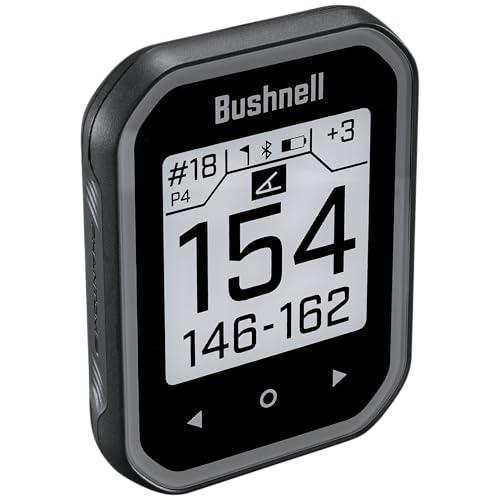
The Phantom 3 Slope takes a different route to eyeglass-friendly yardage. Instead of asking the golfer to align a small laser eyepiece, it presents information on a handheld touchscreen. Large front, center, and back green distances can be read with both eyes open, which may feel far more natural for someone whose frames interfere with traditional rangefinder optics. Automatic course and hole recognition also reduce the number of buttons and aiming steps between the cart and the next shot.
This is a GPS device rather than a laser rangefinder, so it does not provide the exact flagstick targeting workflow of the Tour V6 or Callaway. Its strength is broader course context. The product description lists slope-adjusted GPS distances, a database of more than 38,000 courses, a magnetic cart mount, touchscreen controls, and a rechargeable battery rated for more than 14 hours. A golfer standing beside the cart can glance down for a quick yardage, then use the front, center, and back numbers to judge pin position. That simplicity is valuable, though players who want a precise measurement to a specific flag may find GPS-only information less direct.
Pros
- Touchscreen viewing avoids the narrow laser eyepiece.
- Large front, center, and back distances support quick green planning.
- Preloaded course coverage includes more than 38,000 worldwide courses.
- Slope-adjusted GPS information adds elevation context.
- Magnetic cart mounting and a rechargeable battery suit riding golfers.
Cons
- It does not directly laser-measure an individual flagstick.
- Screen-based GPS information depends on course data rather than a direct line-of-sight target.
The Phantom 3 is the right kind of alternative for someone who has tried laser rangefinders and disliked the view through glasses. It is especially convenient for riders who want a quick glance at the cart rather than a device held to the face. Walkers or players who need exact pin targeting may prefer a laser, while those with progressive lenses may appreciate the normal viewing distance of this GPS format.
To buy this product, click here.
9. Izzo Swami 7000i Touchscreen Golf GPS Rangefinder: Best for Simple GPS Viewing
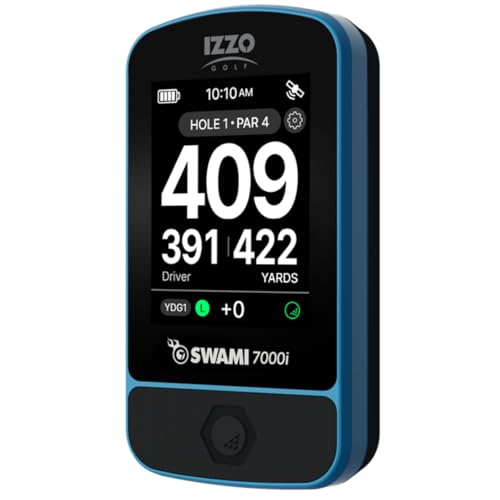
The Izzo Swami 7000i is another strong option for golfers who find a laser eyepiece awkward with glasses. Its 2.5-inch color touchscreen gives the golfer a larger viewing surface at a normal handheld distance, and the listed yellow, blue, and white themes provide some control over visual presentation. There is no need to press the device against a lens or align a crosshair with a flag. A golfer can look down at the screen while standing beside a cart, much like checking a small scorecard.
Its GPS information includes front, center, and back green distances, layup and carry distances for hazards and doglegs, auto-hole advance, shot-distance measurement, and a digital scorecard. The I-Caddie feature can suggest clubs based on target distance. With more than 38,000 courses preloaded and no downloads, updates, or subscription fees listed in the product description, the device is aimed at straightforward course management. It does lack direct laser targeting and the exact flag confirmation that a traditional rangefinder provides. Water resistance, a cart magnet, USB-C charging, and up to 16 hours of GPS battery life make it practical for long rounds.
Pros
- 2.5-inch touchscreen is easier to view without pressing an eyepiece against glasses.
- Color themes offer useful visual flexibility.
- Provides front, center, back, hazard, layup, and dogleg information.
- Includes shot measurement, auto-hole advance, and a digital scorecard.
- USB-C charging, cart mounting, and up to 16 hours of GPS use support full rounds.
Cons
- GPS distances do not directly target a specific flagstick with a laser.
- Touchscreen operation may be less convenient in wet conditions than physical buttons.
Choose the Swami 7000i if your main issue is reading a rangefinder through glasses and you prefer a clear course overview. It suits golfers who think in terms of green zones, hazards, and layups rather than exact pin locks. The Phantom 3 offers a similar screen-first approach with slope features, while the Blue Tees is the better fit for someone who wants both this style of GPS information and a laser in one device.
To buy this product, click here.
Buying Guide
Start with the Viewing Method
Laser rangefinders require the golfer to look through a compact optical path, which can be perfectly comfortable for one glasses wearer and frustrating for another. If your frames sit close to your face or progressive lenses make the image shift, prioritize a model with a documented diopter, such as the MOESAPU. If you dislike eyepieces entirely, a GPS unit with a larger touchscreen, such as the Phantom 3 or Swami 7000i, may be the calmer choice.
Look for Focus Adjustment, Not Magnification Alone
Magnification makes a target appear larger, but it does not automatically correct a blurry image caused by prescription lenses. The MOESAPU specifically lists diopter adjustment for myopia and presbyopia. Most other candidates list magnification but do not provide a dedicated prescription adjustment in the product details. That distinction matters more than comparing 6x and 7x on a product page.
Decide Whether You Need Laser or GPS Information
A laser is useful when you want to target a particular flag, bunker edge, tree, or layup point. GPS is better for a broad view of the hole, including front, center, back, hazards, and doglegs. The Blue Tees Captain Pro combines both approaches. A GPS-only model can be easier to read through glasses, but it cannot replace direct flag targeting in the same way.
Check Display Contrast and Brightness
Glare, tinted lenses, and changing sunlight can turn a small display into a gray blur. The Blue Tees lists an adjustable OLED, while the Acer lists a bright LCD and the REDTIGER lists a transflective LCD. These descriptions suggest different approaches to visibility, but they do not provide a universal guarantee for every prescription or lighting condition. If possible, use the display controls before the round rather than waiting until you are standing over a shot.
Use Feedback That Does Not Depend on Vision Alone
Pin-lock vibration can help confirm that the rangefinder has found the flag without requiring you to keep staring at the screen. Visual Jolt on the Bushnell Tour V6 adds a red ring, while many other models use vibration alone. Audio feedback is not listed for these products. A tactile signal is particularly useful when glare or a glasses frame makes the final readout harder to see.
Match the Mount and Battery to Your Routine
Riding golfers often benefit from a built-in magnet because the device stays within quick reach on the cart. Walking golfers may prefer a lighter design, a lanyard, or a belt clip. USB-C charging is available on several selections, while the Callaway and Bushnell Tour V6 use supplied batteries. A rangefinder that is easy to carry and reliably charged is more useful than one with impressive specifications that remains buried in a golf bag.
Check Slope Controls Before Competitive Play
Slope compensation can help with uphill and downhill shots, but tournament use requires the feature to be disabled under applicable rules. Look for a physical or clearly identifiable slope switch. The Callaway, Bushnell Tour V6, REDTIGER, MOESAPU models, and other laser picks list slope control features. Always verify the rules for the event and check the device before beginning play.
Best Golf Rangefinder for People with Glasses FAQ
What Is the Best Type of Rangefinder for Someone Who Wears Glasses?
There is no single design that fits every prescription. A laser model with adjustable focus is a strong starting point because it lets the wearer tune the image. A GPS device with a larger screen may be more comfortable for people who struggle with narrow eyepieces, progressive lenses, or frames that sit close to the face.
Does Higher Magnification Make a Rangefinder Better for Glasses?
Higher magnification can make a distant flag appear larger, but it does not solve focus or eye-relief problems. A 6x model with a comfortable view may work better for you than a 7x model that forces your glasses against the eyepiece. Focus adjustment and display clarity deserve equal attention.
Can I Use a Laser Rangefinder While Wearing Prescription Glasses?
Yes. Many golfers use laser rangefinders with glasses, but comfort depends on the eyepiece shape, eye relief, frame size, and the rangefinder’s focus controls. Keep your glasses on while setting the focus. If the view remains cramped or blurry, a GPS touchscreen model may be a better match.
Is a GPS Rangefinder Easier to Read Through Glasses?
Often, it can be. A handheld GPS device is read from a normal distance instead of through a small optical tube, so the glasses frame is less likely to interfere. GPS models provide course-based yardages rather than a direct laser reading to the flag, which is the main trade-off.
Do I Need Slope Compensation?
Slope compensation is useful for practice and ordinary recreational rounds on hilly courses because it adjusts distance information for elevation changes. It must be disabled for competitions where slope-enabled devices are not allowed. Choose a model with a clear slope switch so you can verify its status quickly.
Are OLED and LCD Displays Equally Suitable for Eyeglass Wearers?
Both can work, but their visibility depends on lighting, contrast, and the individual display design. The Blue Tees lists an adjustable OLED, while other models use LCD or transflective LCD screens. Adjustable brightness and a readable viewing angle may matter more than the display label alone.
Should Walking Golfers Choose a Lighter Rangefinder?
Weight becomes more noticeable when the device rides in a pocket or hangs from a lanyard for eighteen holes. The F-1000S lists a 0.27-pound weight, making it one of the lighter laser choices here. Walkers should also check whether the rangefinder includes a case, clip, or lanyard and whether charging is convenient between rounds.
Final Verdict
The Blue Tees Golf Captain Pro is the best overall match for golfers with glasses because it gives them two ways to get yardage. Its laser handles precise flag targeting, while GPS front, center, and back distances reduce the need to look through the eyepiece on every shot. The adjustable OLED brightness, 7x magnification, vibration confirmation, USB-C charging, and magnetic mount create a flexible setup for golfers who ride or walk. It is a feature-rich choice, so golfers who want a simple button-and-number device may find it busier than necessary.
The MOESAPU 1200-Yard model deserves the closest look from anyone whose prescription makes focusing difficult because its listed diopter adjustment directly addresses myopia and presbyopia. The Bushnell Tour V6 Shift is the premium laser alternative, while the Phantom 3 Slope and Izzo Swami 7000i are better for golfers who want a screen-first experience without a narrow optical view. Before buying, decide whether your biggest problem is focus, eyepiece comfort, display glare, or the need for exact pin targeting. That choice will matter more than the longest number printed on the box.
