
A pitch that lands softly and releases just enough can feel very different from one that skitters across the back edge. Golfers shopping for greenside spin are usually trying to make those scoring shots more predictable. A control-oriented urethane ball is a more direct starting point for that task than a basic distance ball, although the strike and lie still shape the result.
Picture a clean fairway pitch, then a wet chip from rough. The same ball can respond differently because grass, moisture, groove condition, and club delivery change the contact. Cover material and multilayer construction help define the buying comparison, but they cannot promise a fixed stopping distance or replace the technique needed to deliver the shot.
These nine models use urethane covers and offer different flight, feel, and short-game briefs. The comparison is based on construction and intended use, rather than a measured spin ranking. Start with the response you want around the green, then check whether the same ball also suits your full approaches and putting feel.
Quick Answer
- Control-Oriented Starting Point: TaylorMade TP5.
- All-Round Reference: Titleist Pro V1.
- Callaway Urethane Alternative: Callaway Chrome Tour.
Comparison Table
| Product | Best Fit | Useful Feature | Main Trade-Off |
|---|---|---|---|
| TaylorMade TP5 | Best Overall | Five-layer construction separates long-game and wedge performance goals. | Its tour-oriented construction may be more than a casual golfer needs. |
| Snell Prime 4.0 | Best for a Higher-Speed Urethane Comparison | Four-piece construction gives the model a defined multilayer identity. | Higher-speed positioning is a less direct brief for a very soft recreational-ball shopper. |
| agape MP5 DuraPlus | Best for a Five-Piece Urethane Alternative | Five-piece construction provides a distinct multilayer design. | Higher-launch positioning may not suit a golfer already seeking a lower approach flight. |
| Titleist Pro V1 | Best for an All-Round Control Reference | High-gradient core is designed to support faster ball speed. | Its control-focused construction may be more than a distance-only golfer needs. |
| Titleist Pro V1x | Best for a Higher-Flight Titleist Comparison | Higher-flight positioning suits golfers who want more trajectory. | Higher flight may be less suitable for golfers who already launch the ball high. |
| Vice Pro Golf Balls | Best for a Three-Piece Urethane Alternative | Three-piece construction gives it a more complex performance profile. | Golfers seeking the simplest distance-first design may prefer a two-layer ball. |
| Vice Golf Pro Plus | Best for a Firmer Performance-Oriented Comparison | Four-piece construction supports a more specialized performance profile. | Its high-swing-speed focus may be unnecessary for many casual golfers. |
| TaylorMade Golf 2025 Tour Response Golf Balls, Pink Stripe | Best for a Urethane Ball With a Bold Alignment Pattern | Three-layer construction is designed to maximize energy transfer and ball speed. | Its alignment stripe may be distracting for golfers who prefer a plain cover. |
| Callaway Chrome Tour | Best for a Soft Urethane Control Alternative | Tour urethane soft cover gives the model a control-oriented surface. | Tour-style construction is a different cost-and-use brief from bulk distance-ball shopping. |
1. TaylorMade TP5: Best Overall

The TaylorMade TP5 is the strongest match here for golfers who place greenside control near the top of the shopping list. Its five-layer progressive construction is intended to separate driver and long-iron speed from wedge performance, while the cast urethane cover is the key short-game component. That combination gives the ball a more specialized profile than a basic two-piece distance model, especially for players who use partial wedges, chips, and pitch shots as scoring tools.
The Speed Wrapped Core is also intended to create a softer sound and responsive feel, which may appeal to golfers who dislike the hard click of some distance balls. This is a white, one-dozen configuration suited to regular play, practice, and tournament rounds. The trade-off is straightforward: the TP5 is built around a more performance-oriented concept, so golfers who frequently lose balls may be less comfortable using it casually. Still, for a player who wants a tour-style ball with a clear wedge-spin focus, it is the most complete option in this group.
Pros
- Five-layer construction separates long-game and wedge performance goals.
- Cast urethane cover is suited to a short-game-focused design.
- Positioned for high wedge spin and precision greenside play.
- Soft Speed Wrapped Core is intended to produce a quieter, softer feel.
- Works across drives, iron shots, pitches, and chips rather than specializing in one club.
Cons
- Its tour-oriented construction may be more than a casual golfer needs.
- White-only visibility offers fewer options for golfers who prefer colored balls.
Choose the TP5 if your round often comes down to a delicate pitch, a checked chip, or a wedge that needs to land with purpose. It is less compelling for golfers who mainly want the longest possible flight or who prefer a simple, low-cost ball for water-heavy courses. Players who want the clearest documented short-game emphasis from this group will find the TP5 a logical starting point.
To buy this product, click here.
2. Snell Prime 4.0: Best for a Higher-Speed Urethane Comparison

Prime 4.0 is a four-piece urethane ball, which puts it directly in a short-game-control comparison. Snell positions this model for higher swing speeds, so the construction has a clearer role than a basic distance ball would in a greenside-spin shortlist. Picture a player who likes a penetrating full shot but also practices partial wedges: the buying decision needs to include those scoring shots instead of stopping at the driver.
The urethane cover is an identified feature of Prime 4.0, rather than an unknown reason to rule the ball out. On a second scenario, a golfer comparing two balls from the same patch of fairway can watch how similarly struck pitches land and release. Keep the wedge, lie, and landing area consistent before attributing every bounce to construction. A higher-speed model brief is still a fitting clue, not proof that a slower golfer cannot use it or that a faster golfer will automatically prefer it.
Pros
- Four-piece construction gives the model a defined multilayer identity.
- Urethane cover is directly relevant to a control-oriented shortlist.
- Manufacturer positions Prime 4.0 for higher swing speeds.
- Can be compared across full shots and partial wedges.
- Distinct model from the other urethane families in this guide.
Cons
- Higher-speed positioning is a less direct brief for a very soft recreational-ball shopper.
- Extra layers do not guarantee a better personal spin or flight result.
Choose Prime 4.0 if its higher-speed brief matches your swing and you want to compare a urethane ball through the scoring clubs. Try a few ordinary pitches as well as full shots. A ball that suits the long game but releases awkwardly for your short-game routine still leaves a trade-off to resolve.
To buy this product, click here.
3. agape MP5 DuraPlus: Best for a Five-Piece Urethane Alternative

The MP5 DuraPlus adds a five-piece urethane construction to the comparison. Agape’s control-oriented positioning gives it a relevant reason to be here, with the cover and multilayer design forming the buying brief rather than a promise of a particular spin number. Picture an experienced player repeating a pitch to the same landing spot: the interesting question is whether the ball’s response fits the shot that player already knows how to deliver.
Agape also positions the MP5 around a higher-launch flight profile, so compare that with the flight you want from approach shots. In another situation, a golfer who already launches the ball very high may have a different priority from a player trying to hold a firmer green. Check the exact model and pack quantity before ordering, especially when a listing offers more than one configuration. None of those purchase choices replaces a short-game trial with the wedges and lies you actually use.
Pros
- Five-piece construction provides a distinct multilayer design.
- DuraPlus urethane cover is identified for the model.
- Control-oriented positioning matches the greenside theme.
- Higher-launch brief offers a flight profile to compare.
- A separate ball family broadens the urethane shortlist.
Cons
- Higher-launch positioning may not suit a golfer already seeking a lower approach flight.
- The cover still needs inspection after cuts or abrasive contact.
Choose MP5 as a deliberate urethane comparison, then let ordinary chips and pitches decide whether the response is useful. A golfer who mainly wants bulk practice supply has a different buying brief. Keep the same model and a repeatable landing target during the trial so that a single fortunate bounce does not choose the next purchase.
To buy this product, click here.
4. Titleist Pro V1: Best for an All-Round Control Reference

Pro V1 is a useful reference for a golfer comparing greenside control with whole-round performance. Its cast urethane cover belongs to that short-game brief, while the multilayer construction also addresses the full-shot game. Imagine a short pitch from the fairway with enough green to use: compare the landing and release you can repeat, rather than buying it simply because a tour player chooses the same logo.
Around the green, the soft cast urethane elastomer cover is the important detail. A golfer who hits a low chip on one hole and opens the face for a higher pitch on the next may appreciate having a cover designed around greenside spin and touch. The Pro V1 is also positioned below the Pro V1x in trajectory and spin, which makes it a sensible choice for players who want control without selecting the more aggressive flight profile. It is a polished all-around option for a mid handicapper whose game includes both distance concerns and short-game ambitions.
Pros
- High-gradient core is designed to support faster ball speed.
- Casing layer is intended to reduce long-game spin.
- Cast urethane cover supports greenside spin and control.
- 388 tetrahedral dimple pattern is built for penetrating, consistent flight.
- Balanced profile suits golfers who value both tee performance and touch.
Cons
- Its control-focused construction may be more than a distance-only golfer needs.
- The lower-flight profile may not suit golfers seeking the highest launch.
Choose Pro V1 if its flight, feel, and short-game response work together for you. A second player may prefer the firmer, higher-flight Pro V1x, despite both using urethane covers. Compare the same chips and putts with each before deciding that a premium name alone settles the fit.
To buy this product, click here.
5. Titleist Pro V1x: Best for a Higher-Flight Titleist Comparison

Pro V1x brings a different flight and feel brief from Pro V1 while retaining a cast urethane cover. Titleist positions the X model with a higher flight and firmer overall response, so it deserves a separate comparison rather than being treated as another color of Pro V1. Picture a golfer wanting an approach to land more steeply: the flight profile matters alongside what happens on the next chip.
Imagine a long iron approaching a firm green where a shallow, low-running ball could release too far. The Pro V1x is built around the kind of higher trajectory and stopping-power intent that addresses that situation. Its cast urethane cover keeps the short game in the conversation, so the ball is more versatile than a pure distance model. Still, the higher-flight design may not suit someone who naturally launches the ball high or wants a flatter trajectory in the wind.
Pros
- Higher-flight positioning suits golfers who want more trajectory.
- Dual-core construction is engineered for speed and control.
- 348 tetrahedral dimples are optimized for a high, consistent flight.
- Urethane cover supports wedge and greenside play.
- Strong fit for players seeking stopping power on approach shots.
Cons
- Higher flight may be less suitable for golfers who already launch the ball high.
- Premium construction may be unnecessary for casual golfers.
Compare Pro V1x if the higher-flight, firmer-response direction suits your swing. On a second short-game trial, use the same wedge and landing target as the Pro V1 comparison. The X on the ball is a model distinction, but the choice still needs to follow the response you can use across the round rather than an assumed universal spin advantage.
To buy this product, click here.
6. Vice Pro Golf Balls: Best for a Three-Piece Urethane Alternative

Vice Pro gives a three-piece cast-urethane option to a golfer who wants a control-oriented comparison outside the biggest tour-ball labels. The cover is the relevant short-game feature, while the layered construction gives the model a broader brief than a basic two-piece distance ball. Picture a player practicing chips twice a week: a consistent ball can make those sessions easier to interpret than a pocket full of mixed finds.
This model is described for advanced golfers with medium swing speeds, so it sits in an interesting spot for improving mid handicappers. The soft feel can make a controlled wedge or firm putt feel less harsh, while the closed alignment line gives the eye a clear reference during setup. It will appeal to golfers who enjoy shaping their scoring shots, although its profile is less focused on simple, maximum-distance play than some two-layer alternatives.
Pros
- Three-piece construction gives it a more complex performance profile.
- Cast urethane cover is designed for short-game spin.
- Extra-thin cover supports a control-oriented greenside design.
- Soft feel can suit golfers who dislike a firm impact sensation.
- Closed alignment line provides a clear visual setup reference.
Cons
- Golfers seeking the simplest distance-first design may prefer a two-layer ball.
- Its intended medium-swing-speed positioning may not suit every player.
Choose Vice Pro after comparing the feel on short putts and the release on ordinary pitches. In another scenario, a golfer losing several balls on a narrow course may weigh the delivered cost per ball differently from someone who rarely needs a spare. A value decision still has to include a ball response you like, rather than treating a urethane label as a reason to buy a large quantity immediately.
To buy this product, click here.
7. Vice Golf Pro Plus: Best for a Firmer Performance-Oriented Comparison
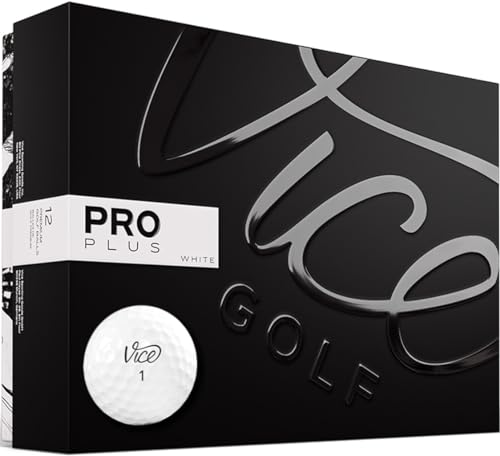
Vice Pro Plus supplies another multilayer cast-urethane design, with a firmer performance-oriented brief than the softer recreational balls many golfers first try. It belongs in a greenside-control comparison because the cover and construction address a different job from simply maximizing a bulk supply. Picture a confident full swing followed by a delicate pitch: the ball has to suit both situations before the performance label becomes useful.
The construction is aimed at golfers who want to separate the feel and response of a premium ball from basic two-layer distance options. A player who attacks the course with a faster swing and expects control around the green may appreciate that four-piece, urethane-focused approach. The trade-off is that specialized performance intent matters less if your main goal is simply a soft, inexpensive ball for occasional rounds.
Pros
- Four-piece construction supports a more specialized performance profile.
- Cast urethane cover is intended for tee-to-green control.
- Extra-thin cover design suits golfers seeking premium response.
- Built for players with higher swing speeds.
- Closed alignment line provides a clean aiming reference.
Cons
- Its high-swing-speed focus may be unnecessary for many casual golfers.
- Premium construction is more specialized than a basic distance ball.
Compare Pro Plus with Vice Pro using the same scoring shots and your normal putter. A second golfer may like the firmer response on a putt but prefer another flight on full approaches. Those are fitting differences to investigate, rather than a reason to call one model universally better. Check the actual generation and selected pack before using the result to choose a larger purchase.
To buy this product, click here.
8. TaylorMade Golf 2025 Tour Response Golf Balls, Pink Stripe: Best for a Urethane Ball With a Bold Alignment Pattern

Tour Response adds a cast-urethane model with the Stripe alignment pattern in the selected finish. The urethane cover is relevant to the greenside-control brief; the stripe serves a separate visual job on the tee and putting surface. Picture a player who likes aiming a visible band before a putt: the pattern may make that routine clearer, but it does not supply the read or the pace.
The bright pink finish gives the stripe a practical companion. On a gray morning or a busy fairway, visibility can make it easier to track the ball from the tee and identify it near the green. The product information also connects this model with technology used in TaylorMade’s TP5 and TP5x lines, although that should be read as a design reference rather than proof of identical performance. This is a ball for golfers who enjoy a more deliberate, premium-oriented setup.
Pros
- Three-layer construction is designed to maximize energy transfer and ball speed.
- 360-degree alignment stripe provides a continuous putting reference.
- Tour Flight Dimple Pattern is intended to support carry and aerodynamics.
- Bright pink finish improves visual tracking and identification.
- Low iron spin and ultra-soft feel are part of the documented positioning.
Cons
- Its alignment stripe may be distracting for golfers who prefer a plain cover.
- The multilayer, feature-rich design may be more than a casual golfer needs.
Choose Tour Response if the short-game response suits your wedge shots and the stripe helps rather than distracts. In another trial, a golfer preferring a clean white view may choose another finish within the model. Keep finish selection separate from performance comparisons, then compare the same landing and release task before buying a larger box.
To buy this product, click here.
9. Callaway Chrome Tour: Best for a Soft Urethane Control Alternative

Chrome Tour provides a Callaway tour-style option with an identified urethane soft cover, Hyper Fast Soft Core, and Seamless Tour Aero design. The cover is the direct connection to greenside control; the core and aerodynamic brief concern the rest of the ball’s performance. Picture a player who likes a comfortable impact but wants to compare the response of a premium cover on short pitches, rather than assuming every soft-feeling Callaway ball follows the same construction.
Callaway positions this Chrome Tour generation around a blend of speed, consistent flight, and control. Those are design aims, not a set of spin numbers measured for this guide. In a second scenario, a golfer playing a familiar firm green can compare equally struck pitches with the usual ball and watch the landing and release. Keep the lie and club consistent, and check which Chrome Tour generation is actually selected. A new box design or a different printed alignment mark should not become an invented tenth performance model.
Pros
- Tour urethane soft cover gives the model a control-oriented surface.
- Hyper Fast Soft Core is an identified construction feature.
- Seamless Tour Aero provides a named aerodynamic design.
- Distinct Chrome Tour model differs from recreational Supersoft.
- Can be evaluated across long shots and short-game use.
Cons
- Tour-style construction is a different cost-and-use brief from bulk distance-ball shopping.
- Design claims do not establish a personal spin advantage without a comparable trial.
Choose Chrome Tour if its feel and control-oriented construction match the shots you practice. Compare a few chips, pitches, and putts before letting a long drive decide the purchase. A golfer who enjoys the full-round response has a clearer reason to buy more than one relying on a premium badge or a promised stopping distance.
To buy this product, click here.
Buying Guide
Start with the Cover
Urethane belongs at the center of this comparison because it is used on control-oriented golf balls. Layer count is another construction choice, rather than a ranking system in which five automatically beats three. A clean chip with a familiar wedge is a better comparison than reading the number of layers on two boxes and declaring a winner. Keep the exact model and generation consistent during a trial.
Separate Full-Wedge Spin From Greenside Response
A full wedge shot, a short pitch, and a low chip are different deliveries. Compare the shots you actually use to score instead of buying from one imagined backspin result. A golfer who mostly lands chips short and lets them roll may value a different feel from someone trying to fly the ball closer to the hole. Neither technique becomes correct solely because the ball has a urethane cover.
Keep the Lie and Club Comparable
Use the same wedge, a similar lie, and a repeatable landing target. Grass or moisture between the face and ball can change the response, and a dirty groove pattern adds another variable. On a practice green, alternate models over several ordinary shots rather than hitting one spectacular pitch and treating it as a result. The point is a response you can recognize repeatedly.
Fit Flight and Feel Across the Round
A ball chosen for short-game control still has to work with the driver, irons, and putter. Pro V1 and Pro V1x provide different flight and feel briefs; Vice Pro and Pro Plus also deserve an individual comparison. If an approach already launches too high, extra height may be less useful than a more manageable trajectory. Let the whole round inform the choice.
Treat Alignment and Color as Options
A stripe or bright finish can help some golfers track or aim the ball. Those are useful preferences within a model, rather than evidence of a separate core or cover design. Tour Response Stripe is included for its urethane construction and visual pattern, but the line cannot read a green. Choose the visual reference you like after the ball’s feel and response fit the task.
Compare the Purchase You Will Actually Make
Check the generation, number of balls, and delivered price for the selected pack. A small trial purchase and a season’s supply solve different problems. Inspect the ball after abrasive contact, replace a badly cut cover, and avoid mixing unidentified found balls into a controlled comparison. Familiarity is easier to build when the model in the pocket is the same one used during practice.
Greenside Spin FAQ
Does Urethane Guarantee More Spin on Every Chip?
No. The cover is a relevant construction feature, but delivery, lie, moisture, and clubface condition all affect the shot. Compare ordinary chips with the same wedge and a similar landing target before deciding which response you prefer.
Is the Softest-feeling Ball Always the Best for Spin?
No. Impact sensation and spin are different questions. A soft recreational ball can feel pleasant without following the construction brief of a tour-style urethane model. Evaluate feel on putts and response on chips as related but separate comparisons.
Should I Choose Pro V1 or Pro V1x?
Compare their different flight and feel briefs against your own game. Titleist positions Pro V1x with a higher flight and firmer overall response. Both use cast urethane covers, so the decision should include full approaches and putting feel alongside short-game shots.
Can a Slower Swinger Use a Urethane Ball?
Yes. Swing speed alone does not decide whether a golfer values a urethane cover. The useful question is whether the full-round flight, feel, and scoring-shot response fit the player. Test a suitable model rather than assuming a tour-style name is automatically too demanding.
Why Did the Ball Release Farther From Wet Rough?
The contact conditions changed. Grass and moisture between the clubface and ball can alter the response compared with a clean fairway lie. A different result from that lie is not enough to prove that the ball model has changed or failed.
Do I Need the Same Ball for Practice and Play?
Using the same model makes feedback easier to interpret. A mixed bag of distance balls and premium urethane balls introduces another variable into landing and release. Choose a model you can keep using consistently, then learn the shots it produces with your own clubs.
Final Verdict
TP5, Pro V1, and Chrome Tour are useful starting comparisons for a golfer putting greenside control near the top of the brief. Pro V1x and the Vice models add different flight and feel directions, while Snell Prime 4.0, agape MP5, and Tour Response offer other urethane constructions. There is no measured winner declared here.
Choose a few scoring shots you actually use, keep the wedge and lie comparable, and watch how the ball lands and releases. Then check full approaches and putting feel before buying more. A model whose response you understand across the round is more useful than a promise of spectacular backspin on one shot.
