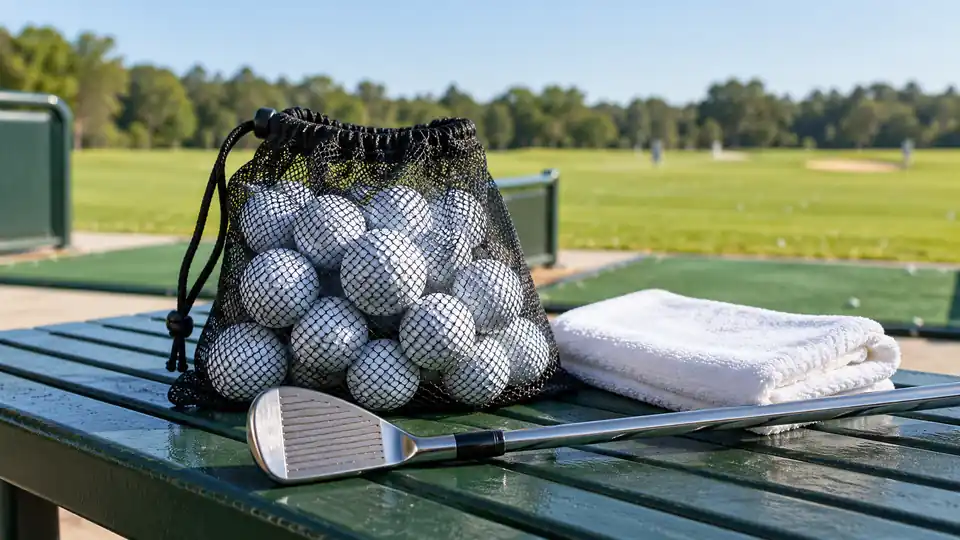
A bad tee shot can turn a peaceful Saturday round into a scavenger hunt through rough, brush, and nearby fairways. That is why many golfers search for Best Budget Golf Balls. Losing a few balls during a round is common, especially for newer players, golfers working on accuracy, or anyone playing a tree-lined course. The challenge is finding a ball that keeps the cost manageable without feeling harsh off the clubface or giving up useful distance.
The cheapest option is not automatically the smartest choice. Some low-cost balls emphasize quantity and durability, while others offer a softer feel, alignment markings, improved visibility, or a cover intended to provide more greenside control. Construction matters too. Two-piece Surlyn balls can make sense for distance-oriented play, while a used multilayer urethane ball may appeal to golfers who want more short-game feel. Swing speed, skill level, playing conditions, and how often you lose balls all shape the decision.
This roundup compares nine distinct options from the selection, including new distance balls, soft low-compression designs, high-visibility choices, and graded pre-owned balls. Different golfers will value different trade-offs, so the rankings focus on documented construction, intended use, package practicality, and useful features rather than unsupported distance promises. The TaylorMade Distance+ earns the strongest overall position for its combination of two-piece construction, distance-focused design, alignment aid, and broad everyday appeal.
Quick Answer
- Distance-Oriented Starting Point: TaylorMade Golf 2021 Distance+ Golf Balls.
- Soft-Feel Alternative: Callaway Golf Supersoft Golf Balls.
- Larger-Supply Comparison: WILSON Profile Distance Golf Ball.
Comparison Table
| Product | Best Fit | Useful Feature | Main Trade-Off |
|---|---|---|---|
| TaylorMade Golf 2021 Distance+ Golf Balls | Best Overall | Two-layer construction keeps the design straightforward for everyday play. | An ionomer cover may appeal less to golfers specifically seeking a urethane-cover feel. |
| Callaway Golf Supersoft Golf Balls | Best Soft-Feel Option | HyperElastic SoftFast Core is designed to balance speed with a soft feel. | The product description does not specify the number of layers or a compression rating. |
| WILSON 2024 Chaos Golf Balls | Best for Casual Visibility | Two-layer construction keeps the ball suitable for straightforward recreational use. | The listing does not provide a compression rating or detailed short-game spin information. |
| Amazon Basics Core Soft Golf Balls, Yellow | Best for Visibility and Alignment | Yellow cover improves visual contrast for many playing environments. | The listing does not identify a multilayer construction or urethane cover. |
| WILSON Profile Distance Golf Ball | Best High-Volume Distance Pack | 36-ball package suits frequent play and golfers who lose balls often. | The listing gives limited information about greenside spin and cover material. |
| TaylorMade SpeedSoft Ink Golf Balls | Best for Soft Feel and Visual Tracking | High-contrast ink design helps distinguish the ball during play. | The ink pattern may be visually busy for golfers who prefer a plain ball. |
| Titleist TruFeel | Best for a Soft Titleist Alternative | Distinct Titleist model with a soft-feel brief. | Soft feel alone does not predict the longest drive for your swing. |
| NITRO Crossfire Golf Balls, White | Best for Large-Supply Durability | 45-ball package is useful for golfers who need frequent replacements. | Surlyn construction may feel less soft around the green than a urethane-cover ball. |
| Callaway Golf Warbird Golf Balls | Best Bulk Pack Alternative | 24-ball package provides a practical reserve for regular play. | A distance-oriented ball is a less direct fit for a buyer whose main priority is premium wedge control. |
1. TaylorMade Golf 2021 Distance+ Golf Balls: Best Overall

The TaylorMade Distance+ is the most balanced choice in this group for a golfer who wants a familiar, new ball with a clear distance focus. Its REACT Speed Core and two-layer construction are paired with an ionomer cover, while the Extended Flight Dimple Pattern is intended to support a longer flight through the air. Those details point toward a straightforward everyday ball for tee shots, approach shots, and casual rounds where keeping the ball moving forward matters more than maximizing specialized tour-style spin.
The Plus Alignment Aid adds a useful touch for golfers who stand over a putt and second-guess the starting line. It can also help with tee-shot alignment, although a marking cannot compensate for a poor read or inconsistent stroke. The listed mid-launch, mid/high-spin positioning and softer feel give this model broader appeal than a purely hard distance ball. A weekend golfer who loses a ball near the first water hazard can replace it without changing the basic feel or strategy of the round, which is exactly the kind of simplicity a budget-minded pick should provide.
Pros
- Two-layer construction keeps the design straightforward for everyday play.
- REACT Speed Core is built around a distance-oriented performance goal.
- Extended Flight Dimple Pattern is intended to support a longer airborne flight.
- Plus Alignment Aid can help with setup on tees and greens.
- The softer feel and mid/high-spin positioning suit a broad range of recreational golfers.
Cons
- An ionomer cover may appeal less to golfers specifically seeking a urethane-cover feel.
- The alignment aid adds usefulness, but it does not replace putting practice or a consistent setup.
This is the strongest starting point for golfers who want one sensible ball for regular rounds without chasing a highly specialized design. It fits players who value distance-oriented construction, a softer impact sensation, and a visible alignment feature in one package. Golfers who place their highest priority on maximum short-game spin may prefer a premium urethane alternative, but the Distance+ remains easier to recommend as an all-purpose choice.
To buy this product, click here.
2. Callaway Golf Supersoft Golf Balls: Best Soft-Feel Option

Callaway Supersoft belongs near the top for golfers who notice impact feel on every club. The product description describes a HyperElastic SoftFast Core engineered for faster driver and iron speed while retaining a soft feel around the green. That combination gives this ball a broader performance brief than a basic distance model. Picture a golfer who dislikes the sharp click of a firm ball on a short pitch. A softer construction can make those small shots feel more comfortable, although actual results still depend on contact, club delivery, and the player’s technique.
The Hybrid Cover is listed as a way to combine distance, soft feel, and durability, with a newer cover system aimed at greenside control and spin. Those are design goals rather than independent test results, but they make the Supersoft a logical pick for players who use their short game to manage scoring. It is also a sensible choice for someone who wants a recognizable current model without moving into a highly technical tour ball. The white finish keeps the look traditional and easy to follow against most fairways.
Pros
- HyperElastic SoftFast Core is designed to balance speed with a soft feel.
- Hybrid Cover supports a combined distance, feel, and durability brief.
- The cover system is specifically positioned for greenside control.
- It offers a more short-game-focused alternative to basic two-piece distance balls.
- The white finish provides a conventional appearance that is easy to identify in play.
Cons
- The product description does not specify the number of layers or a compression rating.
- Golfers who mainly need the largest possible quantity may prefer a bulk-pack option.
Supersoft makes the most sense for a golfer who wants the ball to feel gentle on chips, pitches, and iron shots while still carrying a distance-oriented core design. It may be less compelling for someone who routinely loses several balls per round and cares more about replacement quantity than touch. Choose it for feel and short-game emphasis, not because soft construction guarantees longer shots.
To buy this product, click here.
3. WILSON 2024 Chaos Golf Balls: Best for Casual Visibility

The Wilson Chaos takes a refreshingly uncomplicated route. It uses a two-layer construction with a Surlyn cover and arrives as a multicolor 24-ball package. That combination suits casual golfers who want a supply of new balls and enjoy using color to separate their ball from the crowd. At a busy public course, a colored ball can be easier to identify on the tee box and easier to spot in the fairway than a standard white ball surrounded by other players’ equipment.
The two-layer format signals a simple, distance-oriented design rather than a multilayer short-game specialist. Surlyn is commonly chosen for durability and a firm, practical cover, so this model has the right profile for golfers who want a ball that can handle ordinary rounds without feeling precious. The listing does not provide a compression rating, launch profile, or detailed spin positioning, so shoppers should avoid assuming more than the documented construction supports. Its appeal is clear: a colorful, straightforward replacement ball for relaxed play, practice rounds, and golfers who prefer variety.
Pros
- Two-layer construction keeps the ball suitable for straightforward recreational use.
- Surlyn cover construction is a practical choice for a durable distance-oriented ball.
- Multicolor presentation can improve visual identification on the course.
- The 24-ball package provides a useful supply for golfers who lose balls regularly.
- Its uncomplicated design is easy to understand without matching complex fitting data.
Cons
- The listing does not provide a compression rating or detailed short-game spin information.
- Color preference may be less useful for golfers who want a traditional white ball.
Chaos is a good match for casual rounds with friends, beginner practice, and golfers who would rather spend less time searching for a white ball in the grass. It is less suitable for a player building a highly specific ball-fitting strategy around launch and spin. If your priorities are a lively appearance, a fresh supply, and a durable two-layer format, this Wilson option keeps the decision pleasantly simple.
To buy this product, click here.
4. Amazon Basics Core Soft Golf Balls, Yellow: Best for Visibility and Alignment

This Amazon Basics model focuses on two details that can make a budget round less frustrating: visibility and alignment. The yellow cover is easier for many players to follow through the air and locate against green grass, while the side stamp gives a visual reference for lining up putts. A golfer who spends several minutes peering into rough after every wayward drive may appreciate that practical touch more than another layer of marketing language.
The ball uses a low-compression design and is described as offering a soft feel, straight-flight positioning, and control across the bag. Those statements reflect the product’s intended design, not a guarantee that every swing will fly straight. The listing also identifies the ball as USGA conforming, which gives golfers a clear indication that it is meant for regulation play. The 24-ball quantity makes it more suitable for frequent players than a small trial pack, especially when yellow is preferred for fall golf, overcast conditions, or personal visibility.
Pros
- Yellow cover improves visual contrast for many playing environments.
- Low-compression construction is intended to provide a soft impact feel.
- Side stamp alignment feature gives golfers a simple putting reference.
- The product is described as suitable for golfers across skill levels.
- USGA-conforming positioning supports use in regulation rounds.
Cons
- The listing does not identify a multilayer construction or urethane cover.
- Golfers who strongly prefer white balls may find the yellow finish distracting.
This is a useful fit for beginners, recreational players, and golfers who want a ball that is easier to see without giving up an alignment marking. It also makes sense for anyone who plays in changing light and wants a bright color in the bag. Skip it if your buying decision depends on detailed spin data or a documented tour-style cover, since those specifications are not supplied here.
To buy this product, click here.
5. WILSON Profile Distance Golf Ball: Best High-Volume Distance Pack

The Wilson Profile Distance is aimed squarely at golfers who want to keep plenty of balls on hand. Its high-energy core is listed as supporting long-distance flight, while the low-compression technology is intended to produce a softer feel. That pairing gives the ball a clear recreational identity. Imagine a new golfer playing a wide-open municipal course, hitting a few provisional balls, and wanting to finish the round without worrying about running out. A 36-ball pack makes that sort of day less stressful.
The inner cover and dimple pattern are described as reducing spin to support distance and reduce hooks and slices. Those are manufacturer design claims, so they should be viewed as intended behavior rather than a promise to correct a golfer’s swing. Still, lower-spin positioning can be relevant for players who want a simple ball that prioritizes forward progress over elaborate shot shaping. The available information does not provide a compression number or detailed short-game spin profile, which limits precise fitting advice but keeps the product easy to place in the budget category.
Pros
- 36-ball package suits frequent play and golfers who lose balls often.
- Low-compression technology is intended to provide a softer feel.
- High-energy core is positioned for distance-oriented flight.
- Inner cover design is described as reducing ball spin.
- Spin-reducing dimple design is aimed at practical recreational play.
Cons
- The listing gives limited information about greenside spin and cover material.
- The large package may be unnecessary for golfers who rarely lose a ball.
Profile Distance is the sensible pick for a golfer who wants quantity first and a straightforward distance design second. It can also work well for group outings, practice rounds, and beginners who are still learning course management. Players who prefer a softer premium feel or more documented short-game control should move toward a control-oriented urethane model instead.
To buy this product, click here.
6. TaylorMade SpeedSoft Ink Golf Balls: Best for Soft Feel and Visual Tracking

SpeedSoft Ink brings a little personality to a category filled with white dimples. Its paint-splatter pattern is designed for high visibility, giving golfers a distinctive ball that can be easier to recognize among playing partners’ equipment. That matters during a crowded tee-time scramble, where several white balls can look nearly identical after a few holes. The visual treatment is also a practical way to make a regular round feel less routine.
Under the artwork is a low-compression PWRCORE intended to produce soft feel and fast ball speed, with an Extended Flight Dimple Pattern and mid/high wedge-spin positioning listed in the product information. Those details point to an everyday ball that balances easy impact feel with a distance-minded design. The listing does not provide an independent speed measurement or a compression number, so the product should be selected for its stated construction and visibility benefits rather than a promised yardage gain. It is a particularly approachable choice for golfers who dislike firm-feeling balls.
Pros
- High-contrast ink design helps distinguish the ball during play.
- Low-compression PWRCORE is intended to provide a soft feel.
- The construction is designed around fast ball speed.
- Extended Flight Dimple Pattern supports a distance-oriented profile.
- Mid/high wedge-spin positioning gives the ball a short-game emphasis beyond basic distance.
Cons
- The ink pattern may be visually busy for golfers who prefer a plain ball.
- The listing does not provide measured performance data or a precise compression figure.
Choose SpeedSoft Ink if you want a soft-feeling ball that stands out in the grass and does not look like every other ball in the shop. It suits casual golfers, players who value visual identification, and anyone who wants a comfortable everyday option without moving to a used premium ball. A plain white distance ball remains the cleaner choice for golfers who prefer minimal visual distraction.
To buy this product, click here.
7. Titleist TruFeel: Best for a Soft Titleist Alternative

TruFeel belongs in this comparison as its own model, with soft feel as the central buying reason. That soft response is the main reason to compare it with a firmer-feeling distance ball. Picture a short pitch from a closely cut apron: you want to notice how the ball leaves the face and how much room it needs to roll. Titleist positions TruFeel for golfers who value a very soft response, so that little shot is a sensible place to begin the comparison.
It also offers an alternative to stepping straight into the Pro V1 family. A golfer still losing balls into the trees may prefer to compare feel and replacement cost before choosing a premium multilayer option. Another player may love the muted sensation on a short putt but want a different response on wedge shots. Neither reaction needs a compression-number contest. Check the specific generation and pack being sold, then use a few repeatable chips and putts to decide whether TruFeel earns a place in your regular rotation.
Pros
- Distinct Titleist model with a soft-feel brief.
- Provides an alternative to the Pro V1 family.
- Useful for comparing putting feel with distance-oriented balls.
- Suitable for evaluating a consistent model across a full round.
- Does not rely on a new color to create a separate recommendation.
Cons
- Soft feel alone does not predict the longest drive for your swing.
- Players chasing tour-level wedge performance should also compare premium urethane models.
TruFeel makes sense if a soft response matters more to you than matching a tour player’s ball. On a practice green, compare the same-length putt with your current model before judging it by the box. If the feel encourages a comfortable stroke and the short-game trade-offs suit you, that is a practical reason to stay with it. For a budget purchase, compare the delivered cost per ball with other new balls in equivalent pack sizes.
To buy this product, click here.
8. NITRO Crossfire Golf Balls, White: Best for Large-Supply Durability

NITRO Crossfire is built around quantity and a durable two-piece format. The listing identifies a solid titanium core, a DuPont Lithium Surlyn cover described as cut proof, and a symmetrical dimple design intended to increase lift and decrease drag. That gives the ball a clear role for golfers who want a large reserve of white balls for regular rounds, practice, or a course where water hazards seem to reach for every tee shot.
The aerodynamic design and energy-transfer language suggest a distance-focused construction, while the Surlyn cover points toward practical durability rather than a soft urethane feel. The product is also listed as USGA approved, supporting its use in regulation play. Those features do not guarantee a particular carry distance or make the ball suitable for every swing, but they give shoppers enough information to understand the intended compromise. You are choosing a simple, durable supply of golf balls rather than a highly tuned short-game instrument.
Pros
- 45-ball package is useful for golfers who need frequent replacements.
- Two-piece titanium-core construction is aimed at energy transfer and distance.
- DuPont Lithium Surlyn cover is described as cut resistant.
- Symmetrical dimple design is intended to support lift and reduce drag.
- White finish offers a traditional appearance for regulation rounds.
Cons
- Surlyn construction may feel less soft around the green than a urethane-cover ball.
- The listing provides limited detail about alignment features and short-game spin.
Crossfire works best for golfers who measure value by how many playable balls remain in the garage after a season. Beginners, high-handicap players, and groups organizing casual rounds can all benefit from that supply. Players who routinely work on delicate wedges or want a softer cover should select a different model, since this Nitro option is clearly tilted toward durability and quantity.
To buy this product, click here.
9. Callaway Golf Warbird Golf Balls: Best Bulk Pack Alternative

The Callaway Warbird package earns a place for golfers who want a 24-ball supply from an established golf equipment brand. The product description identifies the 2023 version, white finish, and 24-ball package, but it offers limited construction and performance information compared with the other selections. That means the main documented advantage here is practical quantity from a recognized model line, rather than a clearly stated cover material, compression profile, or layer count.
That limited detail should shape the buying decision. A shopper who needs a simple replacement supply for casual rounds may be comfortable choosing a familiar brand and traditional white appearance. Someone comparing core design, cover feel, alignment aids, or launch tendencies will have more useful information from the TaylorMade, Wilson, Callaway Supersoft, or Amazon Basics listings. Warbird is therefore a reasonable bulk alternative, but it should not be treated as a precisely fitted ball based on the information available.
Pros
- 24-ball package provides a practical reserve for regular play.
- White finish suits golfers who prefer a traditional ball appearance.
- Callaway branding may appeal to golfers who already know the model family.
- The package format is simple to store and distribute for casual rounds.
- It offers a new-ball alternative to pre-owned inventory.
Cons
- A distance-oriented ball is a less direct fit for a buyer whose main priority is premium wedge control.
- A distance-oriented ball is a less direct fit for a buyer whose main priority is premium wedge control.
Warbird suits a golfer who wants a straightforward 24-ball package and does not need detailed fitting information before buying. It is less compelling for players making a careful construction-based comparison, since the available specifications are sparse. Select it for brand familiarity and package practicality, while choosing another model if feel, visibility, alignment, or cover material drives the decision.
To buy this product, click here.
Buying Guide
Start with Construction
Two-piece balls usually offer a simpler distance-oriented profile, which can suit golfers who want a durable everyday ball and do not spend much time shaping shots. The Wilson Chaos, Wilson Profile Distance, TaylorMade Distance+, and NITRO Crossfire all fit that broad category in the product details. Premium multilayer urethane balls follow a different design brief. Compare those separately if wedge control matters more than replacement cost.
Match Feel to Your Preferences
Feel is personal. Some golfers like a firm click that makes the ball feel lively off the driver, while others prefer a softer sensation on irons and short pitches. Callaway Supersoft, Amazon Basics Core Soft, and TaylorMade SpeedSoft Ink are positioned around soft feel or low-compression construction. That does not guarantee extra distance, so treat feel as a comfort and feedback preference rather than a shortcut to lower scores.
Decide How Much Short-Game Information You Need
A golfer who mostly plays casual rounds may be perfectly happy with a durable Surlyn ball. Players who practice chips, pitches, and approach shots more seriously may prefer a premium urethane ball, evaluated separately from this budget shortlist. Cover material is one useful clue, but technique, clubface contact, and shot choice still have a major influence on results.
Think About Visibility
White remains the traditional choice, but yellow and multicolor options can be easier for some players to follow and locate. The Amazon Basics yellow ball is built around visibility and includes a side stamp, while Wilson Chaos offers multiple colors and TaylorMade SpeedSoft Ink uses a high-contrast pattern. If you often lose sight of a ball against cloudy skies, leaves, or rough, visual design deserves more attention than it usually receives.
Choose Quantity Based on Your Round
A smaller dozen is sensible for a golfer who rarely loses a ball or wants to try a model before buying more. Larger packages make more sense for beginners, high-handicap players, practice rounds, and courses with water or dense rough. NITRO Crossfire and Wilson Profile Distance offer larger pack options; check the selected quantity and delivered cost per ball. A big package saves replacement hassle, but it is less useful if the ball’s feel or appearance does not suit you.
Be Careful with Used Balls
A used-ball offer introduces condition, grading, refinishing, and mixed-generation questions beyond the model name. That can make two inexpensive packs very different purchases. This shortlist compares new ball models so the construction and starting condition are clearer. If you shop used, inspect the seller’s actual description and condition policy instead of assuming a familiar logo means every ball arrives with identical cover quality.
Best Budget Golf Balls FAQ
What Should I Look for in Budget Golf Balls?
Start with the construction, cover material, feel, package quantity, and visibility. A two-piece Surlyn ball is a sensible starting point for many recreational golfers who want durability and a distance-oriented design. A multilayer urethane ball may appeal more to players who place greater value on greenside feel. Package size matters too, especially if you regularly lose balls during a round.
Are Two-Piece Golf Balls Good for Beginners?
They can be a practical choice because the design is usually straightforward and often emphasizes durability and distance. Beginners also benefit from not feeling pressured to protect every ball during a learning round. The TaylorMade Distance+, Wilson Chaos, Wilson Profile Distance, and NITRO Crossfire all represent two-piece or two-layer options in this selection.
Do Soft Golf Balls Always Go Farther?
No. A soft feel and longer distance are separate considerations. Low-compression construction can change impact sensation and may suit certain swing profiles, but carry depends on the golfer’s club delivery, contact, launch, and speed. Choose a soft ball because you prefer its feel and intended design, not because softness guarantees more yards.
Are Used Golf Balls Worth Buying?
They can be a separate value option when the condition and seller grading suit your needs, but they are outside the new-model comparison here. Compare delivered price, actual model consistency, and whether refinishing or mixed generations are involved. A small saving is less useful if the contents prevent a consistent ball trial. Start with a known model when learning feel and flight is the priority.
Which Budget Golf Balls Are Easiest to See?
Visibility depends on lighting, background, and personal eyesight, but colored and high-contrast designs can help. The Amazon Basics Core Soft yellow ball offers a bright cover, Wilson Chaos comes in multiple colors, and TaylorMade SpeedSoft Ink uses a distinctive paint-splatter design. White remains familiar and easy to track for many golfers, so visibility is ultimately a personal preference.
Does a Golf Ball Fix a Slice?
No golf ball can replace a change in swing path, face angle, contact, or course strategy. Some products are marketed around lower-spin or straighter-flight design goals, but those descriptions should not be read as a guarantee that a ball will eliminate a slice. Choose a ball that fits your feel, construction, and replacement needs while working on the swing factors that create the curve.
Should I Buy a Ball with an Alignment Aid?
An alignment marking can give you a repeatable visual reference for putts and tee shots. The TaylorMade Distance+ and Amazon Basics Core Soft models include alignment features in the product description. Such markings can support a consistent setup, but they cannot determine the correct read or make an inconsistent stroke reliable by themselves.
Final Verdict
Distance+ is the straightforward starting point for a distance-oriented budget comparison. Supersoft, TruFeel, and SpeedSoft Ink give softer-feel alternatives, while Wilson Profile Distance and NITRO Crossfire suit buyers comparing a larger supply. All nine entries are new-ball models, keeping condition grading out of the main comparison.
Check the delivered cost per ball for the exact pack selected. A low total price can hide a smaller quantity, while a large box becomes poor value if you dislike the ball’s response. Try a modest quantity first, then buy more of the model that makes sense on both ordinary drives and the short shots that finish the hole.
